

Here is the short answer on HR12DE vs HR15DE. Both are petrol engines from Nissan’s HR family, with twin cams, an aluminium build and a timing chain. The HR12DE is a 1.2-litre three-cylinder. The HR15DE is a 1.5-litre four-cylinder. They are different engines, not two sizes of the same one, and you cannot swap one for the other. The HR15DE powers the older Note E11, Tiida, Tiida Latio, Cube Z12, Wingroad, AD van and Juke 15RX/15RS. The HR12DE powers the March K13, Note E12 and Latio N17. It also has a second job: it is the petrol generator inside Nissan’s e-POWER cars, such as the Note e-POWER, Kicks e-POWER and Serena e-POWER. If you need a replacement, go by your model code. If your car is an e-POWER, tell us, because the e-POWER HR12DE is not the same as a normal one.
We sell both. Our stock includes HR12DE engines from the March K13, Note E12 and Latio N17, e-POWER HR12DE engines from the Note HE12, Note E13 and Kix P15, and HR15DE engines from the Note E11, Cube Z12, Juke YF15 and AD VY12. Every listing names the donor car and its model code, and we ship worldwide.

HR12DE vs HR15DE at a glance
| HR12DE | HR15DE | |
|---|---|---|
| Engine family | Nissan HR | Nissan HR |
| Cylinders | Inline three | Inline four |
| Displacement | 1,198 cc (1.2 L) | 1,498 cc (1.5 L) |
| Bore x stroke | 78.0 x 83.6 mm | 78.0 x 78.4 mm |
| Valves | DOHC, 12 valves | DOHC, 16 valves |
| First used | 2010 (March K13) | 2004 (Tiida C11) |
| Example output | 79 PS, 106 Nm (March K13) | 109 PS, 148 Nm (Tiida C11) |
| Main job | Drives the wheels, or works as the e-POWER generator | Drives the wheels |
| Typical gearbox | CVT with two-speed sub-gearbox; none in e-POWER | CVT or four-speed automatic, some manuals |
| Our listings | HR12DE engines | HR15DE engines |
Bore and stroke figures are from the Nissan HR engine reference. The HR15DE output is Nissan’s own figure for the 2005 Tiida 15S in its Heritage Collection. The HR12DE output comes from the Japanese launch coverage of the 2010 March by Car Watch.
HR12DE vs HR15DE: three cylinders against four
This is the point most buyers miss. Because both engines carry the “HR” name and the same 78 mm bore, people assume the HR12DE is just a smaller HR15DE. It is not. The HR15DE has four cylinders and 16 valves. The HR12DE has three cylinders and 12 valves, a longer stroke and its own block, crankshaft and head.
The HR15DE came first. Nissan announced it in August 2004 as a new 1.5-litre four-cylinder, “jointly developed by Nissan and Renault”, and said it would start in the new Tiida. Nissan described a shorter combustion period, better thermal efficiency, a new way of machining the cylinder bores and a mirror-like finish on the crankshaft and camshaft bearings, according to Nissan’s 2004 engine announcement.
The HR12DE arrived in 2010 with the fourth-generation March. Nissan called it a lightweight, compact 1.2-litre three-cylinder with best-in-class fuel economy and strong torque at low and middle engine speeds. To cut vibration at idle, which three-cylinder engines are prone to, Nissan added unbalanced masses to the crank pulley and drive plate, according to Nissan’s March launch release.


Power and torque: HR12DE vs HR15DE in numbers
In the 2005 Tiida 15S, Nissan rates the HR15DE at 109 PS at 6,000 rpm and 148 Nm at 4,400 rpm, in a car weighing 1,100 kg, according to Nissan’s Tiida 15S heritage page. In the 2010 March, the HR12DE made 58 kW (79 PS) at 6,000 rpm and 106 Nm at 4,400 rpm, as reported by Car Watch.
So the HR15DE has roughly 30 PS and 40 Nm more. That is a big gap for small cars. The HR12DE is built for light city cars like the March, where low fuel use matters most. The HR15DE suits heavier cars like the Tiida, Wingroad, Cube and AD van, which often carry more people or cargo.
Fuel use
The HR12DE is the more economical engine. Nissan said the 2010 March reached 26 km/L on the Japanese 10-15 test cycle with idle-stop, the best in its class at the time, according to Car Watch’s launch report. But the HR12DE vs HR15DE fuel comparison also depends on the car. A 1.2 in a heavy car works harder, so the real-world saving can be smaller than the numbers suggest.
The e-POWER HR12DE: same name, different job
Many people searching HR12DE vs HR15DE actually own an e-POWER car, and this matters a lot when ordering. In e-POWER, the petrol engine never drives the wheels. Nissan explains that “the gasoline engine is not connected to the wheels; it simply charges the battery”, and an electric motor does all the driving, according to Nissan’s e-POWER introduction. The first car to get it was the Note in November 2016. Nissan’s price list for that launch names the e-POWER engine as “HR12DE-EM57”, the engine paired with the EM57 motor, while the plain petrol Notes kept the normal HR12DE, as shown in Nissan’s 2016 Note release.
Nissan’s own engineers wrote a paper on developing the new three-cylinder HR12DE for e-POWER, listed in Nissan Technical Review No. 80. So although it carries the same code, the e-POWER engine is built for a different job. It has no gearbox behind it. It bolts to a generator. It runs inside a narrow speed range to charge the battery.

What this means for you:
- An e-POWER car needs an e-POWER HR12DE. A normal HR12DE from a March or petrol Note is not a direct replacement.
- A petrol car needs a normal HR12DE. An e-POWER engine from a Note E13 or Kix P15 is not set up to drive a CVT.
- Check the model code. On the Note E12 generation, HE12 and SNE12 codes are e-POWER, while E12 and NE12 are petrol. The Note E13 generation (E13, SNE13, FE13) is e-POWER only. The Kix P15 range in our stock is e-POWER.
Our e-POWER HR12DE engines:
- Note HE12 e-POWER engine
- Note SNE12 e-POWER 4WD engine
- Note E13 e-POWER engine
- Note SNE13 e-POWER 4WD engine
- Note Aura FE13 e-POWER engine
- Kix P15 e-POWER engine
- Kix SNP15 e-POWER 4WD engine
- Kix RP15 e-POWER engine
- Serena HFC27 e-POWER engine


Which Nissans use the HR12DE vs HR15DE?
The model code is the quickest guide. Here are the codes our stock comes from. Our guide on how to find your engine code shows where to look on your car.
| Model code | Engine | Vehicle | Example listing |
|---|---|---|---|
| K13, NK13 | HR12DE | March (4th gen) | March K13 engine |
| E12, NE12 | HR12DE | Note E12 petrol | Note NE12 engine |
| E12 (DIG-S) | HR12DDR | Note E12 supercharged | Note E12 HR12DDR engine |
| HE12, SNE12 | HR12DE (e-POWER) | Note e-POWER | Note HE12 engine |
| E13, SNE13, FE13 | HR12DE (e-POWER) | Note E13, Note Aura | Note E13 engine |
| P15, SNP15, RP15 | HR12DE (e-POWER) | Kix e-POWER | Kix P15 engine |
| HFC27 | HR12DE (e-POWER) | Serena e-POWER | Serena HFC27 engine |
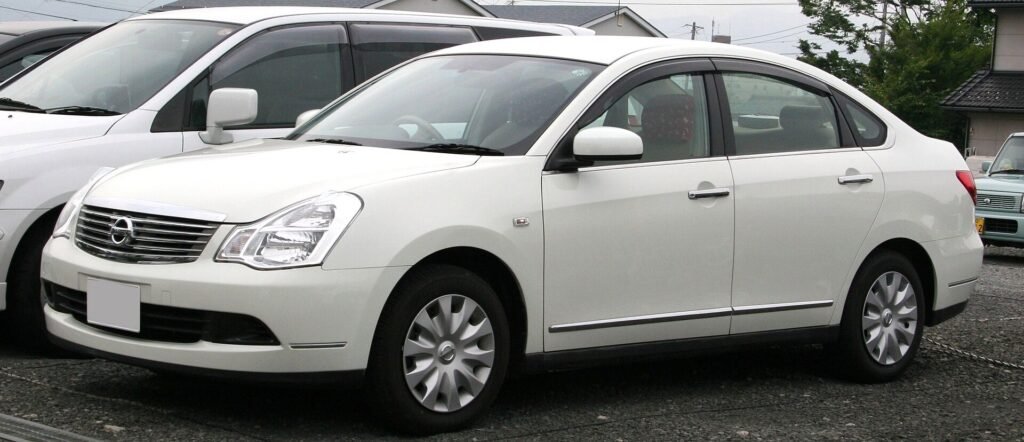
| N17 | HR12DE | Latio / Sunny / Almera | Latio N17 engine |
| E11, NE11 | HR15DE | Note E11 | Note E11 engine |
| C11 | HR15DE | Tiida 1.5 | Tiida C11 engine |
| SC11 | HR15DE | Tiida Latio 1.5 | Tiida Latio SC11 engine |
| Z12, YZ11 | HR15DE | Cube | Cube Z12 engine |
| YF15 | HR15DE | Juke 15RX / 15RS | Juke YF15 engine |
| Y12, NY12 | HR15DE | Wingroad | Wingroad Y12 engine |
| VY12 | HR15DE | AD / AD Expert van | AD VY12 engine |
| CVY12 | HR15DE | Mitsubishi Lancer Cargo (AD twin) | Lancer Cargo CVY12 engine |
| NG11 | HR15DE | Bluebird Sylphy G11 1.5 | Bluebird Sylphy NG11 engine |
| YK12 | HR15DE | March K12 1.5 | March YK12 engine |
Watch the 1.6 too. Some of the same model lines used the HR16DE, a 1.6-litre four-cylinder. Examples are the AD VZNY12, the Note E12 NISMO S, the March FHZK12 1.6 and the NV200 Vanette. We stock it as well, for example the AD VZNY12 engine and the NV200 Vanette VM20 engine. The HR16DE is not interchangeable with either the HR12DE or the HR15DE without changes.
HR12DE cars: March K13
The March K13 is where the HR12DE started, and it is still one of the most common HR12DE donor cars. Nissan launched it in Japan on 13 July 2010 with the new three-cylinder and a new Xtronic CVT with a two-speed auxiliary gearbox. Nissan said that CVT has about 30 percent less friction than other CVTs in its class, according to its March launch release.

- March K13 engine (2014)
- March 2010 engine
- March 2011 engine
- March 2013 engine
- March 2015 engine
- March HR12DE engine
- March NK13 (4WD) engine

HR12DE cars: Note E12 and Latio N17
The second-generation Note (E12) switched from the HR15DE to the HR12DE. Petrol E12 Notes came with the plain HR12DE or the supercharged HR12DDR (sold as DIG-S). Nissan’s 2016 Note price list shows both side by side, according to Nissan’s 2016 Note release. The HR12DDR was announced in 2010 as a direct-injection supercharged engine based on the HR12DE, according to Nissan’s HR12DDR announcement. It has a different fuel system and supercharger, so it is not a direct swap for a plain HR12DE.

Our Note E12 HR12DE engines:
- Note E12 engine (2012)
- Note HR12DE engine
- Note 2017 engine
- Note 2020 engine
- Used Note 2016 engine
- Note NE12 (4WD) engine
Our Note E12 HR12DDR (supercharged) engines:
The Latio N17 sedan, sold as the Sunny or Almera in many markets, also uses the HR12DE in Japan.

HR15DE cars: Note E11, Tiida and Tiida Latio
The first Note (E11) and the Tiida family are the classic HR15DE cars. The Tiida was the first car with the engine in 2004, and Nissan’s release for the Tiida Latio sedan a month later named the “all-new 1.5-liter HR15DE engine”, according to Nissan’s Tiida Latio release.

- Note E11 engine (2012)
- Note 2008 engine
- Note 2009 engine
- Note 2010 engine
- Note HR15DE engine
- Note NE11 (4WD) engine
- Tiida C11 engine
- Tiida Latio SC11 engine


HR15DE cars: Cube, Juke and Sylphy
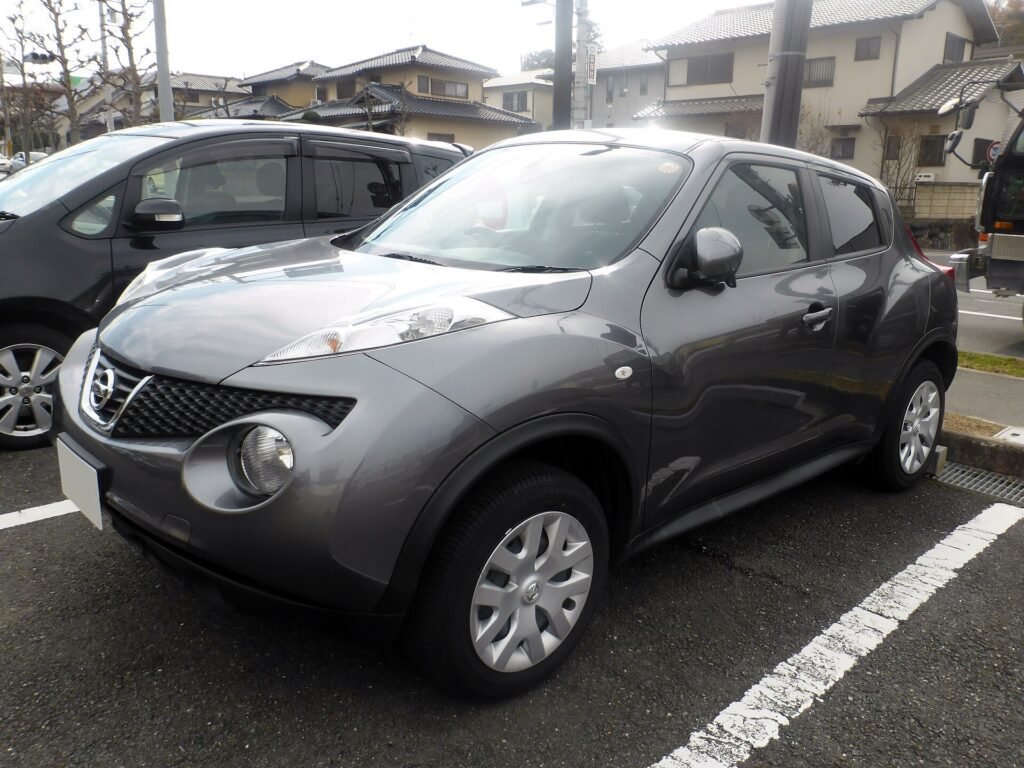
The third-generation Cube (Z12) uses the HR15DE, as does the 1.5 Juke (YF15) and the 1.5 Bluebird Sylphy (G11). The Juke is the one to watch: Japanese 1.5 Jukes use the HR15DE, but the 1.6 and turbo Jukes use different engines.

- Cube Z12 engine
- Cube HR15DE engine
- Cube 2013 engine
- Cube 2016 engine
- Cube YZ11 engine
- Juke YF15 engine
- Juke HR15DE engine
- Juke 2010 engine
- Juke 2018 engine
- Bluebird Sylphy NG11 engine
HR15DE cars: Wingroad, AD and Lancer Cargo
The Wingroad wagon and its work-van sister, the AD (and AD Expert), use the HR15DE in their 1.5 versions. Mitsubishi sold a badged version of the AD as the Lancer Cargo. These vans are often run hard by businesses, so they are some of our most requested HR15DE engines.


- AD VY12 engine (2020)
- AD HR15DE engine
- AD 2014 engine
- AD 2018 engine
- AD 2021 engine
- Wingroad Y12 engine
- Wingroad NY12 (4WD) engine
- Mitsubishi Lancer Cargo CVY12 engine

Can you swap an HR15DE for an HR12DE, or the other way round?
The question usually comes from Note owners. The E11 had the 1.5 and the E12 has the 1.2, so people wonder whether the bigger engine will go into the newer car, or whether a cheap HR12DE will fit an older Note. Our honest answer on an HR12DE vs HR15DE swap: do not plan on it.
- Different number of cylinders. A three-cylinder and a four-cylinder have different blocks, crankshafts, heads, intake and exhaust manifolds and engine mounts.
- Different car platforms. The E11 Note and the E12 Note are built on different platforms, so mounts, wiring and ancillaries do not carry across.
- Engine computer and immobiliser. Each engine needs its own computer, and it must talk to the car’s immobiliser, dashboard and CVT.
- Gearbox. The CVT and its programming are matched to each engine’s output.
- Paperwork. In many countries, a change of engine size must be declared or inspected.
With used HR12DE and HR15DE engines both costing a few hundred dollars, there is no money to be saved by converting. Buy the engine your car was built with.
Normal HR12DE vs e-POWER HR12DE
The same advice applies within the HR12DE itself. A petrol March or Note engine and an e-POWER generator engine have the same code but are set up for different jobs. Order an e-POWER engine for an e-POWER car, and a petrol engine for a petrol car. Tell us your model code and we will match it.
HR12DE vs HR15DE design differences in plain English
You do not need to be an engineer to follow the HR12DE vs HR15DE design gap, but three points explain most of how the engines behave.
Same bore, different stroke
Both engines share a 78 mm bore. The HR15DE has a 78.4 mm stroke, so it is almost “square”. The HR12DE has a longer 83.6 mm stroke, according to the HR engine reference. A longer stroke tends to help torque at low and middle revs. That fits what Nissan said about the HR12DE having strong torque for daily driving at lower engine speeds.
One cylinder fewer
Dropping a cylinder cuts weight, size and internal friction, because there are fewer pistons, rings and valves moving. That is a big part of why the HR12DE uses less fuel. The trade-off is smoothness. Three-cylinder engines have a natural shake, which is why Nissan fitted balance masses to the crank pulley and drive plate on the HR12DE.
Low friction from the start
Nissan designed the whole HR family around low friction and light weight. Its technology overview of the HR and MR engines describes measures such as more precisely round cylinder bores and mirror-finished crankshaft and camshaft journals. Both engines benefit from this.
HR12DE vs HR15DE running costs beyond fuel
- Parts supply. Both engines were built in very large numbers. Filters, plugs, coils, gaskets and sensors are easy to find wherever Nissans are common.
- Spark plugs and coils. The HR12DE has three of each and the HR15DE four, so a full set of plugs or coils costs a little less on the 1.2.
- Servicing. Both use a chain, so there are no timing belt changes. Service costs are close.
- e-POWER extras. e-POWER cars have a battery, inverter, generator and motor as well as the engine. These are separate from the engine, and none of them exist on an HR15DE car.
- Replacement engines. Both are among the cheapest engines to replace in our range, which is good news if yours has failed.
HR12DE vs HR15DE for taxi, delivery and fleet owners
Plenty of HR-engined Nissans work for a living. Note and Latio cars are used as taxis and ride-hailing cars. AD vans and Wingroads do deliveries. Serena e-POWER minivans run as shuttles. If you run several, the HR12DE vs HR15DE question is about keeping vehicles earning.
- Keep a register of each vehicle’s model code, year, engine and whether it is petrol or e-POWER. When one fails you can order the right engine the same day.
- Count the downtime. A matching engine ordered quickly usually costs less overall than a bargain that needs extra parts.
- Shorten oil-change intervals for cars that idle or do short trips. It is cheap protection for a chain-driven engine.
- Ask about multiple engines. Contact us if you need more than one.
The CVT: check it while the engine is out
Most petrol HR12DE and HR15DE cars use a Jatco Xtronic CVT. Some older HR15DE cars use a four-speed automatic, and some vans and hatchbacks have manuals. If the gearbox shudders, slips or whines, deal with it while the engine is out. A new engine will not fix a tired CVT.
We sell CVTs for many of these cars, including the JF015E CVT transmission, used behind small Nissan engines. Browse all our transmissions for sale, and read our guide on used vs rebuilt transmissions before you decide. e-POWER cars have no CVT. Their engine drives a generator instead.
HR12DE vs HR15DE reliability
Both engines are simple, naturally aspirated designs with a timing chain, port injection and no turbo. They are not known for any fatal design fault. When we see them fail early, the cause is nearly always neglect or overheating.
- Oil level. Small engines hold little oil. Running low wears the timing chain, the tensioner and the variable valve timing parts. Check the dipstick between services.
- Overheating. Aluminium heads and blocks do not forgive it. A leaking radiator, failed fan or water pump can damage the head gasket quickly.
- Timing chain noise. A rattle on cold start can mean a stretched chain or weak tensioner, often from long oil-change gaps.
- Ignition coils and plugs. Misfires make the engine shake, which is easy to notice on a three-cylinder. They are cheap to fix.
- Dirty throttle body and idle trouble. An unsteady idle is often a cleaning job, not a failed engine.
- e-POWER engines. They run less often and in a narrow speed range, but they still need oil changes on schedule. Do not skip services because the engine seems quiet.
In the HR12DE vs HR15DE reliability debate there is no clear loser. The condition of the engine you buy, and how you look after it, matter far more.
What to check when buying a used HR12DE or HR15DE
Our guide to buying a used engine goes into detail. For HR engines, focus on these:
- The exact code. HR12DE, HR12DDR, HR15DE or HR16DE. And for HR12DE, petrol or e-POWER.
- The donor car. An engine from the same model code as yours will fit with the least work.
- Two- or four-wheel drive. Some parts around the engine differ, so tell us which you have.
- Mileage. Ask for it and how it was recorded.
- What is included. Long block, or complete with intake, sensors and ancillaries?
- Warranty. Ours is in our warranty policy.
Repair or replace?
Not every problem means a new engine. A warning light, rough idle or misfire is often a coil, plug, sensor or vacuum leak. Get those checked first. These usually point to a replacement:
- Knocking from the bottom end, often after running low on oil
- Low compression on one or more cylinders
- Coolant in the oil, or oil in the coolant
- Heavy oil use with blue smoke
- A seized engine
Used HR engines are cheap, so a replacement is often less expensive than a rebuild once you count labour.
HR12DE vs HR15DE prices: what our engines cost
Prices change with stock, mileage and what is included, so always check the listing. Here is a sample of our HR12DE vs HR15DE prices at the time of writing.
| Listing | Engine | Price |
|---|---|---|
| March NK13 engine | HR12DE | $241 |
| March 2010 engine | HR12DE | $292 |
| March K13 engine | HR12DE | $349 |
| Note E12 engine | HR12DE | $363 |
| Latio N17 engine | HR12DE | $399 |
| Note HE12 e-POWER engine | HR12DE e-POWER | $345 |
| Kix P15 e-POWER engine | HR12DE e-POWER | $434 |
| Note E13 e-POWER engine | HR12DE e-POWER | $566 |
| Serena HFC27 e-POWER engine | HR12DE e-POWER | $1,366 |
| Cube Z12 engine | HR15DE | $315 |
| Juke YF15 engine | HR15DE | $407 |
| Note E11 engine | HR15DE | $409 |
| Tiida Latio SC11 engine | HR15DE | $430 |
| Tiida C11 engine | HR15DE | $518 |
| AD VY12 engine | HR15DE | $596 |
Why the prices differ
Both engines are cheap compared with almost any larger engine, because so many small Nissans have been built. Engines from the March, Note and Cube tend to be the lowest priced. Work-van engines from the AD and Wingroad cost a little more, because businesses want them and the vans are often newer. The Serena e-POWER engine costs the most of this group, as it comes from a bigger, newer and less common vehicle. If two listings look alike and you are not sure which is better value, ask us.
HR12DE vs HR15DE: which should you buy?
You drive a March K13, petrol Note E12 or Latio N17
Buy a normal HR12DE from the same model code. If your Note is a DIG-S, you need the supercharged HR12DDR instead.
You drive a Note e-POWER, Kix e-POWER or Serena e-POWER
Buy an e-POWER HR12DE from the same model line. Do not fit a petrol-car HR12DE.
You drive a Note E11, Tiida, Tiida Latio, Cube, Juke 1.5 or Sylphy 1.5
Buy an HR15DE from the same model code. There are plenty to choose from, so pick by year and mileage.
You run an AD, AD Expert, Wingroad or Lancer Cargo for work
Buy an HR15DE matched to your code and drive type (VY12 two-wheel drive, NY12 four-wheel drive). If your van is a 1.6 VZNY12, you need an HR16DE. For several vans, ask us about buying more than one.
You want more power from a 1.2 car
An HR12DE vs HR15DE conversion is not realistic in these cars. If you need more power, you are better off with a car that came with a bigger engine.
Our HR12DE engines for sale
- March HR12DE engine
- Note HR12DE engine
- Kix HR12DE e-POWER engine
- Note 2021 e-POWER engine
- Note 2023 e-POWER engine
- Kix 2020 e-POWER engine


Our HR15DE engines for sale
- Note HR15DE engine
- Cube HR15DE engine
- Juke HR15DE engine
- AD HR15DE engine
- Cube 2017 engine
- Juke 2014 engine


See every Nissan engine we carry in our Nissan engines for sale category, or the whole range in used engines for sale. For bigger Nissan petrol engines, see our QR25DE vs MR20DE guide.
HR12DE vs HR15DE on the road: how the difference feels
In a light March with one or two people aboard, the HR12DE is fine around town. It pulls well at low speed, which is what Nissan designed it for, and the CVT keeps the revs down. You notice the three-cylinder sound when you push it, and on motorways, hills or with a full car it has to work hard.
The HR15DE has more in reserve. A Tiida, Wingroad or Cube with passengers or luggage feels more relaxed, overtaking needs less planning, and the four-cylinder is smoother when worked hard. It uses a little more fuel, but in a heavier car the gap is not large.
e-POWER cars feel different again, because an electric motor always drives the wheels. The HR12DE only starts when the battery needs charging, so you mostly hear it in the background.
Japanese-market engines: what to expect
Most of our HR engines come from Japanese-market cars, which is why listings show codes like DBA-K13 or DBA-E11. The basic engines are the same designs sold in many countries, but sensors, intake parts, emissions parts and connectors can differ between markets and years. A mechanic can usually move these across from your old engine. Tell us your car’s market and year, and we will flag anything to watch.
Common mistakes when ordering an HR engine
- Ordering by model name. “Note engine” could mean an HR15DE, HR12DE, HR12DDR, HR16DE or e-POWER HR12DE. Give the model code.
- Forgetting e-POWER. e-POWER cars need the e-POWER engine.
- Mixing up HR12DE and HR12DDR. The supercharged DIG-S engine is different.
- Confusing HR15DE and HR16DE. Some vans and hatchbacks used the 1.6.
- Not fixing the cause. If the old engine overheated or ran low on oil, find out why first.
- Skipping fresh parts and fluids. Fit new oil, an oil filter, an air filter, spark plugs and coolant.
How to order your HR12DE or HR15DE from us
- Find your model code and year. Our guide on how to find your engine code can help.
- Choose a listing. Pick an HR12DE engine or an HR15DE engine from a car that matches yours.
- Ask us to confirm fit. Send your chassis number and model code through our contact page.
- Arrange delivery. We ship worldwide. See our shipping policy.
- Install it properly. Use a qualified mechanic and follow our warranty terms.
Looking after your replacement HR engine
- Check the oil every couple of weeks. Small engines hold little, so a small loss matters.
- Change the oil on time, and sooner for short trips, taxi work, deliveries or dusty roads.
- Keep the cooling system healthy. Fresh coolant, a good radiator and a working fan.
- Replace the air filter and spark plugs at Nissan’s intervals.
- Service the CVT with the correct Nissan fluid.
- Drive gently at first and check for leaks over the first few hundred kilometres.
HR12DE vs HR15DE in imported cars
Many Notes, Marches, Tiidas, Cubes, Jukes and AD vans now drive far from Japan, imported second-hand. If yours is one of them, the HR12DE vs HR15DE rule works the same way: the model code on the chassis plate tells you which engine you have.
- Papers may show the wrong year. Import papers sometimes give the import or registration year rather than the build year. Use the model code and chassis number.
- Local versions can differ. A car sold new in your country under another name, such as a Micra, Versa, Sunny or Almera, may use a different engine version from the Japanese car. Tell us the market and we will check.
- Climate and roads. Heat, dust and rough roads are harder on small engines than Japanese city driving. Keep the cooling system and air filter in good order.
A short history of the HR12DE vs HR15DE engines
Nissan revealed the HR15DE in August 2004 alongside the MR20DE as part of a new four-cylinder family developed with Renault, according to Nissan’s 2004 announcement. It went into the Tiida that September and then spread across Nissan’s small cars and vans. Nissan’s own heritage collection notes that the Tiida was one of six new models it unveiled at once in September 2004, according to its Tiida 15S page.
Six years later, Nissan launched the HR12DE with the 2010 March. In Europe, where that car was sold as the Micra, Nissan said the line-up used just two engines, both versions of the new 1.2-litre three-cylinder, according to Nissan’s Geneva 2010 release. In 2016 the HR12DE took on a new role as the generator in the first e-POWER car, and Nissan later used e-POWER in the Serena and Kicks. That history explains why the HR12DE vs HR15DE split falls between car generations, and why the same HR12DE code now covers two very different jobs.
Why buy your HR12DE or HR15DE from us
Small Nissan engines are a big part of our stock. For most model codes we can offer several engines, so you can choose by year, mileage and price. Every listing names the donor car, its model code and its year. We check fitment against your chassis number before you pay, ship worldwide, and back each engine with our warranty policy. Whichever side of the HR12DE vs HR15DE split your car is on, petrol or e-POWER, we can usually supply it.
Checklist before you ask for a quote
- Make, model and full model code (for example K13, E11 or HE12)
- Year and month of manufacture
- Chassis number
- Petrol, supercharged (DIG-S) or e-POWER
- Two- or four-wheel drive, and CVT, automatic or manual
- The country you need the engine shipped to
- What happened to your old engine
HR12DE vs HR15DE: key takeaways
- Cylinders: in the HR12DE vs HR15DE comparison, the HR12DE is a 1.2 three-cylinder and the HR15DE a 1.5 four-cylinder.
- Power: the HR15DE has roughly 30 PS and 40 Nm more.
- Fuel: the HR12DE uses less in light city driving.
- e-POWER: the HR12DE is also a generator engine, and that version is not a direct swap for a petrol one.
- Swaps: they are different engines and do not interchange.
- Price: both are cheap to replace, mostly a few hundred dollars.
- Best buy: for almost every owner, the right answer to HR12DE vs HR15DE is the engine the car was built with.
HR12DE vs HR15DE: frequently asked questions
What is the difference between the HR12DE and HR15DE?
The HR12DE is a 1,198 cc three-cylinder and the HR15DE is a 1,498 cc four-cylinder, both from Nissan’s HR family with twin cams and a timing chain. The HR15DE is more powerful. The HR12DE is lighter and more economical and is also used as the e-POWER generator engine.
Is the HR12DE a 3-cylinder?
Yes. The HR12DE is a three-cylinder, 12-valve engine. The HR15DE is a four-cylinder, 16-valve engine.
Can I put an HR15DE in a car that had an HR12DE?
Not practically. The cylinder count, block, mounts, wiring, computer and often the platform are different. Replace like with like.
Is the e-POWER engine the same as a normal HR12DE?
It shares the code, but it is set up to drive a generator rather than the wheels. Nissan lists it as HR12DE-EM57 in the Note e-POWER. Order an e-POWER engine for an e-POWER car.
Which Note has the HR15DE?
The first-generation Note (E11, NE11) uses the HR15DE. The second-generation E12 uses the HR12DE or HR12DDR, and e-POWER versions use the e-POWER HR12DE.
Do the HR12DE and HR15DE have a timing chain?
Yes, both use a chain. Keep the oil clean and topped up to protect it.
How much is an HR12DE or HR15DE engine?
Most of our HR12DE and HR15DE engines cost a few hundred dollars. The Serena e-POWER engine is the main exception. Check each listing for today’s price.
Do you sell HR12DE and HR15DE engines?
Yes. We sell HR12DE engines, e-POWER HR12DE engines and HR15DE engines from named donor cars, and we ship worldwide.
Final word on HR12DE vs HR15DE
The HR12DE vs HR15DE question looks simple, a 1.2 against a 1.5, but the details catch people out. One is a three-cylinder and the other a four-cylinder. The same Note name covers both. The HR12DE also lives a second life as the e-POWER generator. Check your model code, say whether your car is petrol, DIG-S or e-POWER, and you will get an engine that fits first time.
Browse our HR12DE engines for sale and HR15DE engines for sale, or contact us with your chassis number and we will help you choose.