

Before you buy a replacement engine, you need one piece of information more than any other: the engine code. This guide shows how to find your engine code in a few minutes, using the engine itself, the paperwork and the VIN. Get this right and the engine you order will bolt in. Get it wrong and you will be paying freight twice.

Why the engine code matters more than the model name
One model can leave the factory with three or four different engines. A Toyota Land Cruiser 100 might have a 1HD-FTE diesel, a 1FZ-FE petrol six or a 2UZ-FE V8, depending on the year and the market. They share a badge and nothing else. Mounts, wiring, sensors and even the gearbox bolt pattern can change between engines in the same car.
That is why knowing how to find your engine code matters more than knowing the model name. The engine code tells you exactly which motor you have. It is the code we ask for when you contact us, and it is what we match against our stock before you pay.
How to find your engine code on the engine itself
The first answer to how to find your engine code is to look at the engine block, the most reliable place there is. Manufacturers stamp the code, and usually a serial number, into a flat machined pad on the block. Common spots are:
- On the side of the block, just below where the cylinder head meets it.
- At the front of the block near the timing cover, or at the back near the bell housing.
- On a tag or sticker on the timing cover or rocker cover (less reliable, since covers get swapped).
If you only remember one thing about how to find your engine code, make it this: the block does not lie. The stamping is often covered in oil and grime. A rag, some degreaser and a torch will help. Take a clear photo once you find it, because you will want to send it to whoever is supplying the replacement.
Check the VIN
On many cars and light trucks sold in North America, one character of the 17 digit VIN identifies the engine. It is usually the 8th character, though some makers use a different position. The vehicle identification number article explains how the VIN is laid out. You can find the VIN on the dashboard at the base of the windscreen, on the driver’s door pillar and on your registration papers.
For a lot of owners, the VIN is the quickest answer to how to find your engine code without opening the bonnet. The VIN alone does not always give you the full engine code, but it narrows things down fast. If you are unsure, send us the full VIN and we will check fitment for you.
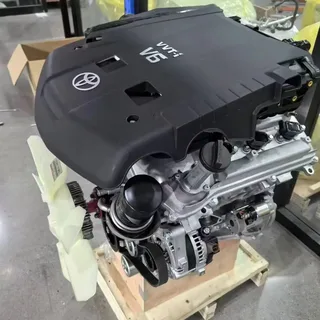
Read the chassis code on Japanese vehicles
Japanese domestic and grey import vehicles often use a chassis or model code instead of a 17 digit VIN. It is printed on a plate in the engine bay or on the firewall. The first letters usually point to the engine. For example:
- Toyota HDJ100 and HZJ79: the HD and HZ letters mean a 1HD or 1HZ diesel. See our 1HD-FTE engine.
- Toyota KDJ and KDN codes: a 1KD or 2KD diesel, like our 1KD engine.
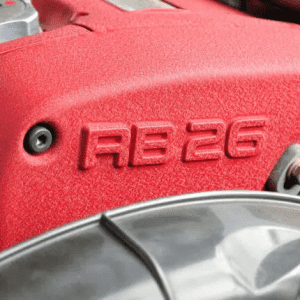
- Nissan BNR32, BCNR33 and BNR34: the Skyline GT-R, with the RB26DETT engine.
Other makers use their own systems, but the idea is the same, and it is a handy way to find your engine code on an import. The model code is a strong clue, then the stamping on the block confirms it.
Look through the paperwork
If the engine is out of reach, or the stamping is unreadable, the paperwork is another way to find your engine code:
- The owner’s manual often lists the engine options for the model, with codes.
- Service invoices from a workshop usually show the engine code next to the parts they fitted.
- Registration or import papers sometimes list engine type and capacity.
- Parts receipts for filters, belts or gaskets can confirm the engine family.
How to find your engine code when the engine has been swapped
This is where people get caught out, and where knowing how to find your engine code on the block really pays off. If a previous owner replaced the engine, the VIN and paperwork will describe the original motor, not the one in the car now. Always check the block stamping if there is any chance of a past swap. A 4×4 with a non standard engine, or a performance car with a lot of modifications, is worth checking twice.
What to do with the code
Once you know how to find your engine code and have it written down, you can search our shop by engine name or browse by brand on our shop engines by brand page. Popular codes include the 2JZ-GTE, 1GR-FE, TD42, 4D56 turbo and the Cummins 6BT.
When you send us a request, include:
- The engine code, with a photo of the stamping if possible.
- The VIN or chassis code.
- Year, model, gearbox type and whether the vehicle is two or four wheel drive.
- What happened to the old engine, so the cause can be fixed before the new one goes in.
Common questions
Is the engine code the same as the engine serial number?
No. The code identifies the engine type, such as 1KD-FTV or RB26DETT. The serial number identifies that one individual engine. Both are usually stamped side by side.
Can I fit a different engine code from the same family?
Sometimes, but expect changes to wiring, the ECU or mounts. Our guide on choosing the right engine or transmission covers this, or ask us before you order.
What if I still cannot find it?
Send us the VIN or chassis number and a few photos of the engine bay. Knowing how to find your engine code saves time, but we are happy to help if you get stuck. You can also read our warranty policy and shipping policy before you buy.
Own a Mercedes? Our Mercedes S-Class engine replacement guide explains how to read a Mercedes engine number.
Own a BMW? Our BMW X5 engine replacement guide explains how to read BMW engine codes such as N63B44 and B57D30O0.
Next step: checking the engine itself
Once you have the code, the next job is judging the replacement. Our guide to buying a used engine covers the 21 checks we use, from compression figures and warranty terms to freight and fitting.