

If you are comparing the 2GR-FE vs 2GR-FKS, here is the short answer. Both are 3.5-litre (3,456 cc) Toyota V6 engines with the same 94 mm bore and 83 mm stroke, but they are different generations. The 2GR-FE is the older, port-injected engine found in most Toyota and Lexus V6 models from 2005 into the mid-2010s. The 2GR-FKS is its successor from 2015 onward, with D-4S direct plus port injection, wider-range VVT-iW valve timing, a higher compression ratio and exhaust manifolds cast into the cylinder heads. They are not drop-in replacements for each other. If your vehicle left the factory with a 2GR-FE, the cleanest and cheapest repair is almost always another 2GR-FE, and the same goes for the 2GR-FKS.
That is the answer most buyers need. The rest of this guide explains why, because the details are where expensive mistakes happen. We cover the whole GR V6 family that customers ask us about, including the 2GR-FSE, the hybrid 2GR-FXE and 2GR-FXS, and the smaller 3GR and 4GR engines. We also show which vehicles use which engine, the trap of the same engine code being built in two different layouts, and exactly what to confirm before you order a replacement.
2GR-FE vs 2GR-FKS: the short answer for buyers
Before the detail, here is a summary of the points that matter when you are about to spend money on an engine.
- Same size, different engine. Both share the 3,456 cc displacement and 94 x 83 mm bore and stroke, but the cylinder heads, fuel system, valve timing system, exhaust layout and engine management are different.
- Fuel system is the big divider. The 2GR-FE uses port injection only. The 2GR-FKS uses Toyota’s D-4S system, which adds a camshaft-driven high-pressure pump and a second set of injectors that spray straight into the cylinders.
- Different eras of vehicle. As a rule of thumb, Toyota and Lexus V6 models built before about 2016 use the 2GR-FE (or 2GR-FSE in some rear-drive Lexus and Crown models). Many V6 models from 2016 onward use the 2GR-FKS. Model by model, the changeover year varies, so always check the engine code.
- Swapping between them is a project, not a repair. Fitting one in place of the other means dealing with wiring, the engine computer, the fuel system, the exhaust and often the transmission. For most owners it makes no financial sense.
- Layout matters too. The 2GR-FKS is built in both transverse (front-drive based) and longitudinal (rear-drive and truck) versions. A Tacoma engine is not a Camry engine, even though both are called 2GR-FKS.
Toyota’s GR V6 family at a glance
Toyota’s GR series is a family of 60-degree V6 petrol engines with aluminium open-deck blocks, thin cast-iron cylinder liners and chain-driven double overhead camshafts. According to the detailed technical review published by Toyota-Club.net’s GR engine series guide, the family replaced Toyota’s older MZ and VZ V6 engines and the inline-six JZ engines, and was used in everything from family sedans and minivans to SUVs and pickups.
The number at the start of the code tells you the basic engine size and bore and stroke. The letters after the dash describe features such as direct injection or hybrid use. So the 2GR-FE, 2GR-FSE, 2GR-FKS, 2GR-FXE and 2GR-FXS are all 3.5-litre engines from the same basic design, while the 1GR is a 4.0-litre truck engine and the 3GR and 4GR are smaller engines for rear-drive cars.
The table below summarises the versions we stock and get asked about most. Figures come from the sources linked in this article. Power outputs vary by vehicle, market and year, so treat them as typical ranges rather than guarantees for a particular engine.
| Engine code | Capacity | Bore x stroke | Fuel injection | Main layout | Typical vehicles |
|---|---|---|---|---|---|
| 2GR-FE | 3,456 cc | 94.0 x 83.0 mm | Port injection | Transverse | Camry, Avalon, RAV4 V6, Highlander, Sienna, Lexus ES 350, RX 350 |
| 2GR-FKS | 3,456 cc | 94.0 x 83.0 mm | D-4S (direct + port) | Transverse and longitudinal | Later Camry, Highlander, Sienna, Lexus RX 350 (transverse); Tacoma, Lexus GS 350 (longitudinal) |
| 2GR-FSE | 3,456 cc | 94.0 x 83.0 mm | D-4S (direct + port) | Longitudinal | Lexus IS 350, GS 350, RC 350, Toyota Crown, Mark X |
| 2GR-FXE | 3,456 cc | 94.0 x 83.0 mm | Port (RX/Highlander) or D-4S (GS/Crown) | Transverse and longitudinal | Lexus RX 450h (2009-2015), Highlander Hybrid, Lexus GS 450h, Crown Hybrid |
| 2GR-FXS | 3,456 cc | 94.0 x 83.0 mm | D-4S (direct + port) | Transverse | Lexus RX 450h (from 2016), Highlander Hybrid |
| 3GR-FE | 2,994 cc | 87.5 x 83.0 mm | Port injection | Longitudinal | Crown and Reiz (China), Lexus GS 300 and IS 300 in some markets |
| 3GR-FSE | 2,994 cc | 87.5 x 83.0 mm | D-4 (direct only) | Longitudinal | Lexus GS 300, Toyota Crown, Mark X |
| 4GR-FSE | 2,499 cc | 83.0 x 77.0 mm | D-4 (direct only) | Longitudinal | Lexus IS 250, GS 250, Toyota Crown, Mark X |
| 1GR-FE | 3,956 cc | 94.0 x 95.0 mm | Port injection | Longitudinal | Hilux, Fortuner, Prado, 4Runner, FJ Cruiser, Tacoma (to 2015), Land Cruiser |
If your engine is not a GR V6 at all, browse our full range of Toyota engines for sale or shop engines by brand. Layout and application data in this table follow the Toyota-Club.net technical review, which lists bore, stroke, compression and installation for each GR variant. Vehicle applications are given as a guide only. Markets differ, and your engine code is the final word.
The 2GR-FE explained
The 2GR-FE is the engine most people mean when they say “Toyota 3.5 V6”. It went into production in 2005 and, according to AustralianCar.Reviews’ 2GR-FE engine profile, it effectively replaced the older 1MZ-FE V6 and 2JZ-GE inline-six. It was designed for transverse mounting, which means it sits sideways in front-wheel-drive based cars, minivans and crossovers.
2GR-FE specifications
When the engine launched in the Australian-built Aurion, Toyota’s published figures reported by GoAuto’s Aurion drivetrain report gave a 3,456 cc capacity, a 94 x 83 mm bore and stroke, a 10.8:1 compression ratio and a 163 kg service weight. Dual VVT-i adjusts the intake cam across 40 degrees and the exhaust cam across 35 degrees of crankshaft angle.
| Specification | 2GR-FE (verified) |
|---|---|
| Configuration | 60-degree V6, DOHC, 24 valves, timing chain |
| Capacity | 3,456 cc |
| Bore x stroke | 94.0 x 83.0 mm |
| Compression ratio | 10.8:1 |
| Fuel system | Sequential port injection |
| Valve timing | Dual VVT-i (intake and exhaust) |
| Intake | Acoustic Control Induction System (ACIS) |
| Typical output | About 268 hp and 248 lb-ft in many Camry and Avalon applications; higher in some Lexus and later tunes |
Output depends on the vehicle. SlashGear’s list of 2GR-FE vehicles notes the common 268 hp and 248 lb-ft rating in V6 Camry and later Avalon models, with the earliest Avalon rated higher under the older measurement method. That spread is normal for the GR family and is one reason we never quote a single horsepower figure as if it applies to every engine.
Where you will find a 2GR-FE
The 2GR-FE was Toyota’s mainstream V6 for roughly a decade. Common applications include the Toyota Camry V6, Avalon, Aurion, RAV4 V6, Highlander, Sienna, Venza, Previa/Estima and Alphard, and the Lexus ES 350 and RX 350 of the same era. It also went into the Lotus Evora and, in supercharged form, the Lotus Exige S and TRD Aurion, but those supercharged versions carry their own code.
Known issues to check on a used 2GR-FE
The 2GR-FE has a good reputation, but three points come up again and again when we check these engines.
- The VVT-i oil supply line. On early engines, part of the oil feed line to the VVT-i actuators was made of rubber. Toyota’s own Limited Service Campaign announcement for the VVT-i oil line explains that this rubber section could degrade, leak oil, cause abnormal engine noise and switch on the oil pressure light. Dealers replaced it with a redesigned line. The campaign covered certain Avalon, Camry, RAV4, Lexus ES 350 and RX 350 vehicles, and an extended campaign bulletin filed with NHTSA added certain Highlander and Sienna models. On any used 2GR-FE, look at which line is fitted. If it still has the original rubber section, replace it before the engine goes in.
- The water pump. Toyota-Club.net’s owner and workshop experience section describes water pump leaks and noise as a usual 2GR-FE problem and suggests treating the pump as a service item. It sits behind the timing cover area and is driven by the serpentine belt, so changing it while the engine is out is far easier than doing it in the car.
- Ignition coils and VVT sprocket noise. The same source notes ignition coil updates on earlier engines and a brief rattle at start-up from the VVT sprockets, which it describes as common across most GR engines. A short rattle on a cold start does not always mean a failing engine, but it should be investigated, and it is one reason a video of the engine running is valuable.
None of this makes the 2GR-FE a bad buy. It means a sensible buyer checks these items, budgets for a water pump and seals, and asks the seller which oil line the engine has.

The 2GR-FKS explained
The 2GR-FKS is the newer generation of Toyota’s 3.5 V6. According to AustralianCar.Reviews’ 2GR-FKS engine profile, it was first introduced in 2015 for the Lexus GS 350 and RX 350, then went into the 2016 Toyota Tacoma and later Toyota models. It evolved from the 2GR-FSE and was the first Toyota or Lexus engine to combine VVT-iW valve timing with D-4S injection.
What changed compared with the 2GR-FE
- D-4S injection. Each cylinder has a direct injector in the combustion chamber and a port injector in the intake. The engine blends the two depending on load. This needs separate low-pressure and high-pressure fuel systems, including a high-pressure pump driven by a camshaft.
- VVT-iW intake timing. The intake cam can be retarded much further than on the 2GR-FE. Toyota-Club.net gives the adjustment range as 75 degrees on the intake and 41.5 degrees on the exhaust, compared with 40 and 35 degrees on the 2GR-FE. That wider range lets the engine run in an Atkinson-style mode at light load for economy and switch back for power.
- Exhaust manifolds in the heads. Reporting on the Tacoma launch, WardsAuto’s coverage of the Tacoma’s D-4S V6 highlighted the integrated exhaust manifold, reduced-friction oil sumps and the new valve timing system as key differences from earlier 2GR engines.
- Higher compression. The 2GR-FKS runs an 11.8:1 compression ratio, against 10.8:1 for the 2GR-FE.
- Resin valve covers and revised cooling. The 2GR-FKS uses plastic cylinder head covers and an electrically heated thermostat. Toyota-Club.net notes it runs about 5 degrees Celsius hotter than the 2GR-FE under normal conditions, with the thermostat heater opening it earlier under heavy load.
2GR-FKS outputs in real vehicles
The 2GR-FKS is tuned differently for each vehicle, so output varies more than many buyers expect.
| Vehicle | Layout | Published output | Source |
|---|---|---|---|
| 2016 Toyota Tacoma | Longitudinal | 278 hp, 265 lb-ft | WardsAuto |
| 2016 Lexus RX 350 | Transverse | 295 hp | Lexus pressroom |
| 2017 Toyota Highlander | Transverse | 295 hp, 263 lb-ft | Toyota pressroom |
| 2018 Toyota Camry | Transverse | 301 hp at 6,600 rpm, 267 lb-ft at 4,700 rpm | NOLN |
The Highlander figures come from Toyota’s 2017 Highlander press release, which also notes the switch to an eight-speed automatic. The Camry data is from NOLN’s 2018 Camry technical specification, which confirms the 11.8:1 compression ratio and lists 0W-20 oil for the V6. The RX 350 engine code and output are confirmed in the Lexus 2016 RX press information.
Known issues to check on a used 2GR-FKS
The 2GR-FKS is newer, so there is less long-term history, and we prefer to be careful about generalising. Toyota-Club.net summarises several Toyota service bulletins that are worth knowing about:
- A knocking noise from the brake vacuum pump at idle on certain 2017 to 2023 Avalon, Camry, Highlander and Sienna models, addressed by a revised vacuum pump.
- Misfire codes on certain 2018 to 2021 Lexus RX 350 models, addressed by a revised crankshaft sensor rotor and an engine computer update.
These are bulletins, not proof that every engine has a fault. They are useful because they tell you what to listen for and which updates a used engine may or may not already have. As with any direct-injection engine, ask about service history and the oil used, and remember that the high-pressure fuel pump and direct injectors are extra parts that a port-injected 2GR-FE simply does not have.

2GR-FE vs 2GR-FKS side by side
This table puts the nine verified 2GR-FE vs 2GR-FKS differences in one place, together with the capacity and bore and stroke they share. Where a figure varies by vehicle, we give the common range and say so.
| Feature | 2GR-FE | 2GR-FKS |
|---|---|---|
| Production start | 2005 | 2015 |
| Capacity and bore x stroke | 3,456 cc, 94 x 83 mm | 3,456 cc, 94 x 83 mm |
| Compression ratio | 10.8:1 | 11.8:1 |
| Fuel injection | Port injection only | D-4S: direct and port injection |
| High-pressure fuel pump | No | Yes, camshaft driven |
| Intake valve timing | Dual VVT-i, about 40 degrees range | VVT-iW, about 75 degrees range, Atkinson-style mode |
| Exhaust manifolds | Separate manifolds | Integrated into cylinder heads |
| Cylinder head covers | Aluminium | Resin (plastic) |
| Layouts built | Transverse | Transverse and longitudinal |
| Typical output range | About 268 to 280 hp in most applications | About 278 to 301 hp depending on vehicle |
| Typical gearbox partner | Five- or six-speed automatic depending on model | Six- or eight-speed automatic depending on model |
Two things stand out. First, the 2GR-FKS is clearly the more advanced and more efficient design, which is why Toyota moved to it. Second, nearly every item in the table is a reason the two engines do not interchange easily: different heads, fuel system, valve timing control, exhaust connections and, very often, a different transmission behind them.
Can you swap a 2GR-FKS into a 2GR-FE vehicle?
This is one of the most common questions we receive, usually from someone whose 2GR-FE has failed and who has seen a low-mileage 2GR-FKS for sale. The honest answer is that it can be done by a specialist, but it is rarely a sensible repair. The points below are general engineering guidance rather than a tested procedure for any particular vehicle.
What a cross-generation swap involves
- Engine computer and wiring. The 2GR-FKS needs control of direct injectors, an injector driver, a high-pressure pump control valve, fuel pressure sensors and the VVT-iW system. A 2GR-FE computer and harness cannot run it. You would need the matching computer and harness, and you would then have to make it work with the rest of the vehicle’s electronics and immobiliser.
- Fuel system. The low-pressure fuel supply, fuel pump control and fuel lines may need to change to suit the D-4S system.
- Exhaust. With the manifolds built into the heads, the front exhaust connections and catalytic converters are different, so the original front pipes will not simply bolt on.
- Intake, sensors and ancillaries. Intake plenum, throttle body connections, vacuum pump, brackets and belt routing can all differ by generation and vehicle.
- Transmission. Many 2GR-FKS vehicles use an eight-speed automatic that talks to the engine computer. Pairing a 2GR-FKS with an older gearbox, or carrying the new gearbox over, adds more electronics and mounting work.
- Registration and emissions. In many countries, fitting a different engine type than the vehicle was approved with can affect inspections, emissions testing or insurance. Check your local rules first.
Once you add the parts and labour, a cross-generation swap usually costs more than a matching used or rebuilt engine and takes far longer. Going the other way, putting a 2GR-FE into a vehicle built with a 2GR-FKS, has the same problems in reverse.
What does usually carry over
Some external parts, such as certain sensors or small hardware, may be shared between engines of the same layout. Do not assume it. Compare part numbers for anything you plan to move from your old engine to the replacement. If you send us your old engine code and the part numbers you want to reuse, we can tell you what we know before you buy.
The layout trap: same code, different engine
Here is a mistake that catches experienced buyers. Several GR engines were built in both transverse and longitudinal form, under the same engine code.
- 2GR-FKS. Toyota-Club.net lists a transverse 2GR-FKS for vehicles such as the RX 350, and a longitudinal 2GR-FKS for the Lexus GS and Toyota Tacoma. A Tacoma engine sits lengthways, drives a rear-drive transmission and has a different oil pan, mounts, intake arrangement and accessory layout from a Camry or Highlander engine.
- 2GR-FXE. The first-generation hybrid engine in the Lexus RX 450h and Highlander Hybrid is a transverse, port-injected engine. The 2GR-FXE in the Lexus GS 450h and Crown Hybrid is longitudinal and uses D-4S injection. AustralianCar.Reviews’ 2GR-FXE profile notes the GS 450h engine used a 13.0:1 compression ratio against 12.5:1 for the RX 450h.
The practical lesson is simple. When you ask for a quote, tell the seller the vehicle and drive layout as well as the engine code. If a listing covers both layouts, as some broad product listings do, confirm which version is actually being supplied before you pay. We do this check on every order because the code alone is not enough.
The other 2GR engines buyers ask about
2GR-FSE: the rear-drive Lexus and Crown V6
The 2GR-FSE was Toyota’s first engine to combine direct and port injection. Production began in August 2005, according to WardsAuto’s report on the twin-injection 2GR-FSE, which rated it at 306 hp in the Lexus IS 350. It is a longitudinal engine used in the Lexus IS 350, GS 350 and RC 350 and the Toyota Crown and Mark X. It is the direct ancestor of the 2GR-FKS, but it still uses conventional VVT-i rather than VVT-iW, and separate exhaust manifolds.
If you own a rear-drive Lexus 350 model built before the GS moved to the 2GR-FKS in 2015, a 2GR-FSE is usually what you need. Our Toyota 2GR-FSE engine listing has the verified specifications. If the gearbox behind it also needs replacing, many rear-drive Lexus and Toyota models with longitudinal V6 engines use the six-speed automatic in our Toyota A960E transmission listing; match the gearbox code before ordering.
One point for used-engine buyers: Toyota-Club.net reports that higher oil consumption is a known characteristic of the direct-injection GR engines (2GR-FSE, 3GR-FSE and 4GR-FSE), and that Toyota ran service campaigns on some of them. Ask for compression figures and, ideally, a record of oil use before you commit.
2GR-FXE and 2GR-FXS: the hybrid V6 engines
The X in these codes marks engines built for Toyota and Lexus hybrid systems. They run an Atkinson-cycle strategy with higher compression ratios, and the engine works alongside electric motors rather than on its own. When the 2010 RX 450h arrived, Auto123’s first drive of the 2010 RX 450h reported that compression rose from 10.8:1 to 12.5:1 as the engine moved to the Atkinson cycle.
The 2GR-FXS replaced it from the 2016 RX 450h. The Lexus 2016 RX press information describes it as a direct-injected 3.5-litre V6 hybrid engine with a combined system output of 308 hp. In design terms it is closely related to the 2GR-FKS.
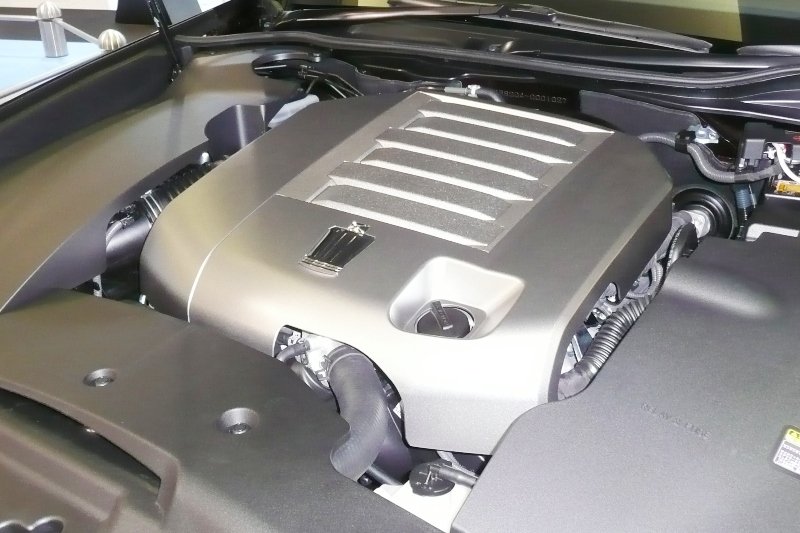
Hybrid engines are not interchangeable with non-hybrid engines, even when the block looks the same. They are calibrated for the hybrid system and often lack conventional accessory drives. If you have a hybrid, order the hybrid code: see our 2GR-FXE engine and 2GR-FXS engine listings.
The 3GR, 4GR and 1GR engines: related, but not alternatives
Because they share the GR name, the smaller and larger family members sometimes get suggested as substitutes. They are not.
3GR-FE and 3GR-FSE (3.0 litre)
Both are 2,994 cc longitudinal engines with an 87.5 mm bore and the same 83 mm stroke as the 2GR. The 3GR-FE uses port injection and was common in China-market Crown and Reiz models and in some markets’ Lexus GS 300 and IS 300. The 3GR-FSE uses Toyota’s D-4 direct injection without port injectors. According to AustralianCar.Reviews’ 3GR-FSE profile, it was offered in Australia only in the Lexus GS 300 from 2005 to 2011. See our 3GR-FE and 3GR-FSE listings.
4GR-FSE (2.5 litre)
The 4GR-FSE is a 2,499 cc direct-injection engine with an 83 x 77 mm bore and stroke and a 12.0:1 compression ratio, as documented in AustralianCar.Reviews’ 4GR-FSE profile. It powers the Lexus IS 250 and GS 250 and several Crown and Mark X models. Our 4GR-FSE engine listing covers it in more detail.
1GR-FE (4.0 litre)
The 1GR-FE shares the 94 mm bore but has a longer 95 mm stroke, giving 3,956 cc. It is a longitudinal truck and SUV engine found in the Hilux, Fortuner, Land Cruiser Prado, 4Runner, FJ Cruiser and earlier Tacoma. It is a separate design with its own parts, so it cannot stand in for a 2GR. If your truck has one, see our Toyota 1GR-FE engine.
What replaced the 2GR V6 in newer Toyota and Lexus models?
If your vehicle is newer than the 2GR-FKS era, it may not have a GR V6 at all. Toyota has moved several of its former V6 models to smaller turbocharged or four-cylinder engines, so a 2GR is not the right replacement for them.
- T24A-FTS 2.4 turbo. This four-cylinder turbo engine has taken the place of the V6 in newer models such as the Highlander, Tacoma and Lexus RX 350. See our Toyota T24A-FTS engine.
- A25A-FKS 2.5 four-cylinder. Many Camry, RAV4, Avalon and Lexus ES models from 2018 use this Dynamic Force engine instead of a V6. If your four-cylinder Camry needs an engine, see our Toyota A25A-FKS engine.
- V35A-FTS 3.4 twin turbo V6. This is a different V6 family used in larger vehicles such as the Tundra, Land Cruiser 300 and Lexus LX 600. It is not related to the 2GR. See our Toyota V35A-FTS engine.
As always, the engine code on the block decides what you need.
Which engine does my vehicle have?
The table below is a starting point based on the sources in this guide. Changeover years differ between markets, and some vehicles were sold with more than one engine in the same year. Use it to narrow things down, then confirm with the engine code stamped on your block. Our guide on how to find your engine code shows where to look.
| Vehicle | Usual 3.5 V6 engine code | Notes |
|---|---|---|
| Toyota Camry V6 (XV40 and XV50, 2006/07 to 2017) | 2GR-FE | Transverse |
| Toyota Camry V6 (from 2018 model year) | 2GR-FKS | Transverse, eight-speed automatic |
| Toyota Avalon (2005 onward, earlier generations) | 2GR-FE | Later Avalon models moved to the 2GR-FKS |
| Toyota RAV4 V6 (2006 to 2012) | 2GR-FE | Transverse |
| Toyota Highlander V6 (to 2016) | 2GR-FE | Transverse |
| Toyota Highlander V6 (from 2017) | 2GR-FKS | Transverse, eight-speed automatic |
| Toyota Sienna V6 (to 2016) | 2GR-FE | Transverse |
| Toyota Sienna V6 (from 2017) | 2GR-FKS | Transverse |
| Toyota Tacoma V6 (2016 to 2023) | 2GR-FKS | Longitudinal; Tacoma to 2015 used the 4.0 1GR-FE |
| Lexus ES 350 (XV40 to XV60 generations) | 2GR-FE | Transverse |
| Lexus RX 350 (2007 to 2015) | 2GR-FE | Transverse |
| Lexus RX 350 (from 2016) | 2GR-FKS | Transverse |
| Lexus RX 450h (2009/10 to 2015) | 2GR-FXE | Hybrid, transverse, port injection |
| Lexus RX 450h (from 2016) | 2GR-FXS | Hybrid, transverse, D-4S |
| Lexus IS 350, GS 350 (to 2015), RC 350; Toyota Crown, Mark X 3.5 | 2GR-FSE | Longitudinal |
| Lexus GS 350 (from 2015 update) | 2GR-FKS | Longitudinal |
| Lexus GS 450h (L10, 2012 onward) | 2GR-FXE | Hybrid, longitudinal, D-4S |
Camry, Highlander and Sienna changeovers follow the Toyota press materials and Toyota-Club.net bulletins cited above. RX and GS details follow the Lexus press information and AustralianCar.Reviews. Grey-import and Japanese domestic market vehicles can differ, so the stamped code always wins.
What to confirm before ordering a 2GR engine
Whether you are buying a 2GR-FE, a 2GR-FKS or any other GR engine, these checks prevent most of the problems we see. They build on the general checklist in our guide to buying a used engine.
Identification
- Engine code and serial number. Send a clear photo of the stamping on your old block. The code alone settles the 2GR-FE vs 2GR-FKS question in seconds.
- VIN or chassis number. This lets the seller check the model year, market and original engine.
- Drive layout. Front-wheel drive, all-wheel drive, rear-wheel drive or four-wheel drive. This tells you whether you need a transverse or longitudinal engine.
- Transmission code. Especially important on vehicles that changed from six-speed to eight-speed automatics at the same time as the engine changed. Our Lexus RX350 transmission listing shows how the six-speed and eight-speed versions split by model year.
- Hybrid or non-hybrid. RX 450h and Highlander Hybrid owners need the X-code engine.
What is included
- Long block or complete engine. Ask whether the engine comes with the intake manifold, injectors, high-pressure pump (on D-4S engines), coils, sensors, alternator, starter, compressor and wiring, or as a bare assembly.
- Oil cooler and lines. Some 2GR-FE versions have an oil cooler and some do not. Make sure the engine matches what your vehicle needs, or plan to transfer your own parts.
- Engine computer. Usually you keep your original computer when fitting a like-for-like engine. If a computer is supplied, check that it matches your vehicle and whether it needs programming to your immobiliser.
Condition evidence
- Compression or leak-down results for all six cylinders, with the numbers, not just “tested”.
- A video of the engine running if it was tested in or out of the donor vehicle, including a cold start where possible.
- Mileage evidence, such as a donor vehicle photo of the odometer or a history record. Treat mileage claims without evidence with caution.
- Oil line check on early 2GR-FE engines, as explained above.
Terms
- Warranty conditions. Read what is covered, for how long and what installation evidence is required. Ours is set out in our warranty policy.
- Shipping and import costs. International buyers should check freight, packing and who pays customs duties. Our shipping policy explains how we handle it.
- Returns. Know the return conditions before you order. See our return and refund policy.
- Payment and terms. Check accepted payment methods in our payment policy and the full terms and conditions before you pay.
Common mistakes when buying a Toyota 3.5 V6
These are the errors we see most often. Each one is avoidable.
- Ordering by model name alone. “Camry V6 engine” could mean a 2GR-FE or a 2GR-FKS depending on the year. Always order by engine code.
- Assuming newer is better for your car. A 2GR-FKS is a more advanced engine, but in a 2GR-FE vehicle it creates a wiring, computer and exhaust project. The right engine is the one your vehicle was built with.
- Ignoring layout. A longitudinal Tacoma or GS engine will not go into a Camry or Highlander without major changes, and the reverse is also true.
- Mixing up hybrid and non-hybrid engines. A 2GR-FXE or 2GR-FXS is not a 2GR-FE or 2GR-FKS with a different label.
- Forgetting the cause of the original failure. If your old engine overheated or lost oil, find out why. A blocked radiator, failed water pump or leaking oil line will damage the replacement too.
- Not budgeting for fitting parts. Plan for gaskets, seals, coolant, oil, filters, spark plugs and, on a 2GR-FE, a water pump. These cost far less with the engine out than they do later.
- Skipping the transmission check. If the engine failed because of a gearbox problem, or the transmission is also worn, deal with both together. Our comparison of used vs rebuilt transmissions can help you decide.
Installation tips that protect a replacement 2GR engine
The following is general workshop guidance. Always follow the factory service information for your specific vehicle, and use a qualified mechanic. Our warranty, like most in the industry, requires professional installation.
- Transfer or replace with care. Compare every part you move from the old engine. Sensors, brackets and pulleys can differ between versions and model years.
- Refresh the cooling system. Flush or replace the radiator if it is old, fit a new thermostat, and use the coolant type Toyota specifies. Bleed the system properly, because trapped air can cause localised overheating.
- Use the correct oil. Use the grade specified for your vehicle. For example, NOLN’s specification for the 2018 Camry lists 0W-20 for the 2GR-FKS V6. Change the oil and filter after the first few hundred kilometres to remove assembly debris.
- Prime before starting. Make sure the engine has oil pressure before it fires, particularly after it has been stored. Your mechanic may disable fuel or ignition and crank until the oil light goes out.
- Check the fuel system on D-4S engines. On 2GR-FKS and 2GR-FSE engines, check fuel lines and high-pressure connections carefully and follow torque specifications. High-pressure fuel leaks are a fire risk.
- Clear codes and run relearn procedures. Idle and throttle relearns may be needed after the swap, and some vehicles need a scan tool for these steps.
- Keep records. Keep receipts for parts and labour, and note the date and mileage of installation. Warranty claims depend on this paperwork.
Is a used 2GR engine worth buying?
For most Toyota and Lexus owners with a failed 3.5 V6, a good used or rebuilt engine of the correct code is the most economical way back on the road. Our 21-point used engine buying checklist covers how to judge one. Both the 2GR-FE and 2GR-FKS are widely used, which helps with parts availability and with finding mechanics who know them.
We do not publish general price comparisons here because prices change with condition, mileage, what is included and shipping destination. The current listing price for each engine is shown on its product page. What we can say is that the value of a used engine depends less on the headline price and more on three things: whether it is the correct code and layout, what evidence you have of its condition, and the warranty and support behind it. A slightly cheaper engine with no compression figures and the wrong oil cooler arrangement is rarely the bargain it looks like.
Shop 2GR and GR-family engines
We list the main GR V6 engines individually, so you can go straight to the one you need:
- Toyota 2GR-FE engine for sale: Camry, Avalon, RAV4, Highlander, Sienna, ES 350, RX 350 and others
- Toyota 2GR-FKS engine for sale: later Camry, Highlander, Sienna, RX 350 and Tacoma
- Toyota 2GR-FSE engine for sale: IS 350, GS 350, RC 350, Crown and Mark X
- Toyota 2GR-FXE hybrid engine and 2GR-FXS hybrid engine
- 3GR-FE, 3GR-FSE and 4GR-FSE engines for rear-drive Lexus and Crown models
You can also browse all Toyota engines for sale or our full range of used engines. If the transmission needs attention too, we list units such as the Toyota Camry and RAV4 automatic transmission and the Lexus RX350 transmission. Confirm the transmission code before ordering, just as you would with the engine.
Not sure which one you need? Contact us for a quote with your engine code, VIN or chassis number, model year, drive layout and destination country. We will check fitment, tell you what the engine includes and confirm availability before you pay.
Frequently asked questions
Is the 2GR-FKS better than the 2GR-FE?
It is newer and more efficient, with direct plus port injection, wider valve timing and more power in most applications. That does not make it the better choice for your vehicle. If your car was built with a 2GR-FE, a 2GR-FE is the correct replacement.
Will a 2GR-FKS bolt into my 2GR-FE Camry?
Not as a simple replacement. The fuel system, engine computer, wiring, exhaust connections and often the transmission are different. A specialist could do it, but for most owners it costs more than fitting a matching 2GR-FE.
How do I know if I have a 2GR-FE or 2GR-FKS?
Check the code stamped on the engine block, or check your VIN with a dealer or parts supplier. Our guide on finding the engine code on the block, VIN and chassis plate shows where to look. As a quick visual clue, the 2GR-FKS has plastic cylinder head covers and a high-pressure fuel pump on the engine, while the 2GR-FE has aluminium covers and no high-pressure pump.
Are the 2GR-FE and 2GR-FSE the same?
No. They share the same capacity and bore and stroke, but the 2GR-FE is a transverse, port-injected engine, while the 2GR-FSE is a longitudinal engine with D-4S direct and port injection for rear-drive Lexus and Toyota models.
Is the Tacoma 2GR-FKS the same as the Camry 2GR-FKS?
They share the core design and code, but the Tacoma engine is longitudinal and the Camry engine is transverse. Oil pans, mounts, intake parts and accessory layouts differ, so treat them as different engines when ordering.
Can a hybrid 2GR-FXE replace a 2GR-FE?
No. Hybrid engines are built and calibrated to work with the hybrid system and are not interchangeable with conventional engines. Order the same code your vehicle has.
What should I replace when fitting a used 2GR-FE?
At minimum, check the VVT-i oil line, and consider a new water pump, thermostat, gaskets and seals, spark plugs, oil and filter, and fresh coolant. Fix whatever caused the original engine to fail.
Do you ship 2GR engines internationally?
We ship worldwide on request. Contact us with your destination for a freight quote. Customs duties and import taxes are normally the buyer’s responsibility, as set out in our shipping policy.
Conclusion: choose by code, not by year or badge
The 2GR-FE vs 2GR-FKS question has a clear answer once you see the differences. The 2GR-FE is the proven, port-injected 3.5 V6 behind a decade of Toyota and Lexus models. The 2GR-FKS is the more advanced D-4S and VVT-iW successor, built in both transverse and longitudinal forms. They share a bore, a stroke and a family name, but not much that makes them interchangeable in practice.
Start with the engine code on your block, confirm the drive layout and transmission, check whether your vehicle is a hybrid, and ask for real condition evidence. Do that and you will order the right engine the first time. When you are ready, view our 2GR-FE and 2GR-FKS listings, or request a quote and we will help you match the correct engine to your vehicle.