

Here is the short answer on 1KR-FE vs 1KR-VET. Both are the same basic engine: Daihatsu’s 1.0-litre, three-cylinder KR engine with an aluminium block, twin cams and a timing chain. The 1KR-FE is the naturally aspirated version used in the Passo, Vitz, Yaris, iQ, Aygo and the non-turbo Roomy and Tank. The 1KR-VET is the turbocharged version used in the turbo Roomy, Tank and Thor and in the Raize and Rocky SUVs. The turbo makes far more torque, 140 Nm against roughly 90 Nm. Toyota says that is the kind of torque you would expect from a 1.5-litre engine. They are not interchangeable without a lot of extra parts, so buy the version your car came with.
We sell both. Our 1KR-FE stock includes a general Toyota 1KR-FE engine and engines from the Passo KGC30, Passo M700A, Roomy M900A, Vitz KSP130 and Yaris KSP210. Our 1KR-VET stock includes a general Toyota 1KR-VET engine and turbo engines from the Roomy, Tank and Raize. That is more than 250 1KR-FE engines and about 50 1KR-VET engines in total. Every listing names the donor car and model code, and we ship worldwide.

1KR-FE vs 1KR-VET at a glance
| 1KR-FE | 1KR-VET | |
|---|---|---|
| Engine family | Daihatsu / Toyota KR | Daihatsu / Toyota KR |
| Layout | Inline three, DOHC, 12 valves | Inline three, DOHC, 12 valves |
| Displacement | 996 to 998 cc (1.0 L) | 996 cc (1.0 L) |
| Bore x stroke | 71 x 84 mm | Same KR family |
| Aspiration | Naturally aspirated | Turbocharged |
| Block and cam drive | Aluminium, timing chain | Aluminium, timing chain |
| Example output | 51 kW (69 PS), 92 Nm (2020 Yaris) | 72 kW (98 PS), 140 Nm (2019 Raize) |
| Main vehicles | Passo, Boon, Vitz, Yaris, iQ, Aygo, Roomy, Tank, Thor | Roomy, Tank, Thor, Justy turbo, Raize, Rocky |
| Typical gearbox | CVT; manual in some markets | CVT (D-CVT in the Raize) |
| Our listings | 1KR-FE engines | 1KR-VET engines |
The family details, bore, stroke and the 10.5:1 compression of the 1KR-FE come from the Toyota KR engine reference. The 1KR-FE output is the Japanese Yaris figure in the Yaris XP210 reference, and Toyota’s own Yaris specification sheet lists the 1KR-FE at 0.996 litres. The 1KR-VET output and torque come from Openers’ report on the Raize launch and Paul Tan’s Raize coverage.
1KR-FE vs 1KR-VET: one engine, with and without a turbo
The KR engine was designed by Daihatsu, Toyota’s small-car company. The KR engine reference describes it as a straight-three with an aluminium block, a chain-driven twin-cam head and four valves per cylinder. It weighs about 69 kg with its ancillaries, which is very light for a car engine. The 1KR-FE has a 71 mm bore and an 84 mm stroke.
The 1KR-VET is the same family with a turbocharger. Toyota introduced it in November 2016 in the Roomy and Tank, describing it as “a newly developed 1.0-liter turbo engine capable of producing torque equivalent to that of a 1.5-liter-class engine over a wide rpm range”, according to Toyota’s Roomy and Tank launch release.
So the 1KR-FE vs 1KR-VET difference is not size. It is how much air goes in. The turbo forces more air into the same three cylinders, which needs stronger internal parts, a different engine computer, the turbo itself, and oil and coolant lines to feed the turbo. That is why the two cannot simply be swapped.

Power, torque and fuel: 1KR-FE vs 1KR-VET in numbers
In the 2020 Japanese Yaris, the 1KR-FE makes 51 kW (69 PS) at 6,000 rpm and 92 Nm at 4,400 rpm, according to the Yaris XP210 reference. In the 2019 Raize, the 1KR-VET makes 72 kW (98 PS) and 140 Nm. That torque is available from 2,400 to 4,000 rpm, according to Paul Tan.
That is about 30 PS more power and roughly 50 percent more torque from the turbo. The torque gap matters more than the power gap. The 1KR-VET pulls from low revs where you actually drive. The 1KR-FE has to rev to over 4,000 rpm before it gives its best.
The fuel cost of that extra pull is small. In the 2016 Roomy and Tank, Toyota rated the two-wheel-drive 1KR-FE at 24.6 km/L, the four-wheel-drive 1KR-FE at 22.0 km/L and the 1KR-VET turbo at 21.8 km/L on the Japanese JC08 cycle, according to Toyota’s Japanese Roomy and Tank release. In real driving a turbo uses more fuel if you use its power often, but in a loaded Roomy the 1KR-FE has to work harder too.
Which feels better?
In a light Passo or Vitz with one or two people, the 1KR-FE is fine around town. In a Roomy or Tank full of people, or on a motorway or a hill, the 1KR-FE works hard and gets noisy, and the turbo makes life much easier. That is why Toyota put the turbo in the heavier Roomy, Tank and Raize, and never in the little Passo.
Which Toyotas use the 1KR-FE vs 1KR-VET?
The model code helps, but with the Roomy and Tank it is not enough on its own, because the M900A code covers both engines. Check your car’s grade (turbo grades are usually marked T or G-T), the engine code on the block, or send us your chassis number. Our guide on how to find your engine code shows where to look.
| Model code | Engine | Vehicle | Example listing |
|---|---|---|---|
| KGC10 | 1KR-FE | Passo (1st gen) | Passo KGC10 engine |
| KGC30, KGC35 | 1KR-FE | Passo (2nd gen) | Passo KGC30 engine |
| M700A, M710A | 1KR-FE | Passo (3rd gen) | Passo M700A engine |
| KSP90 | 1KR-FE | Vitz (2nd gen) 1.0 | Vitz KSP90 engine |
| KSP130 | 1KR-FE | Vitz (3rd gen) 1.0 | Vitz KSP130 engine |
| KSP210 | 1KR-FE | Yaris (Japan) 1.0 | Yaris KSP210 engine |
| KGJ10 | 1KR-FE | iQ 1.0 | iQ KGJ10 engine |
| M900A (non-turbo) | 1KR-FE | Roomy, Tank 2WD | Roomy M900A engine |
| M910A | 1KR-FE | Roomy, Tank 4WD | Roomy M910A engine |
| M900A (turbo) | 1KR-VET | Roomy, Tank G-T and Custom G-T | Tank 1KR-VET engine |
| A200A | 1KR-VET | Raize 1.0 turbo 2WD | Raize A200A engine |
| A210A | 1KR-VET | Raize 1.0 turbo 4WD | Raize A210A engine |
One useful shortcut: at the 2016 launch, Toyota’s price list showed the 1KR-VET turbo only with front-wheel drive. Every four-wheel-drive Roomy and Tank at launch used the 1KR-FE, as shown in Toyota’s launch release. So a four-wheel-drive M910A almost always needs a 1KR-FE. The Raize is different: its four-wheel-drive A210A uses the turbo.
Daihatsu and Subaru twins
Daihatsu builds these cars and sells its own versions. The Passo is the Toyota twin of the Daihatsu Boon. The Roomy and Tank are twins of the Daihatsu Thor and Subaru Justy. The Raize is the twin of the Daihatsu Rocky. The engines follow the same 1KR-FE vs 1KR-VET split as the Toyota version.


Watch out for other small Toyota engines
Not every 1.0 or 1.3 Toyota uses a KR engine. Some 1.3 Vitz, Passo and Yaris models use the 1NR-FE or 2SZ-FE, and later 1.2 and hybrid Raize models use different engines. If your car is not a 1.0, it probably needs something else. See our 1NR-FE engine listing and our 1NZ-FE vs 2NZ-FE guide.
Roomy and Tank: the main 1KR-FE vs 1KR-VET question
Most 1KR-FE vs 1KR-VET questions we get are about the Roomy and Tank. Toyota launched both on 9 November 2016. They were built by Daihatsu at its Ikeda plant and offered with either the 1.0 1KR-FE or the 1.0 1KR-VET turbo, both with a CVT, according to Toyota’s launch release. The cars look almost the same either way, so check the grade and the engine before you order.

Our Roomy and Tank 1KR-FE engines:
- Roomy M900A engine
- Roomy 2023 engine
- Roomy 1.0 engine
- Roomy 2WD engine
- Roomy 2025 engine
- Roomy M910A (4WD) engine
- Roomy M910A engine (2017)
- Roomy 2019 engine
- Roomy 2022 engine
- Tank M910A engine
Our Roomy and Tank 1KR-VET turbo engines:
- Toyota 1KR-VET engine (Tank M900A)
- Roomy turbo engine
- Tank turbo engine
- Roomy 2021 turbo engine
- Roomy 1KR-VET engine

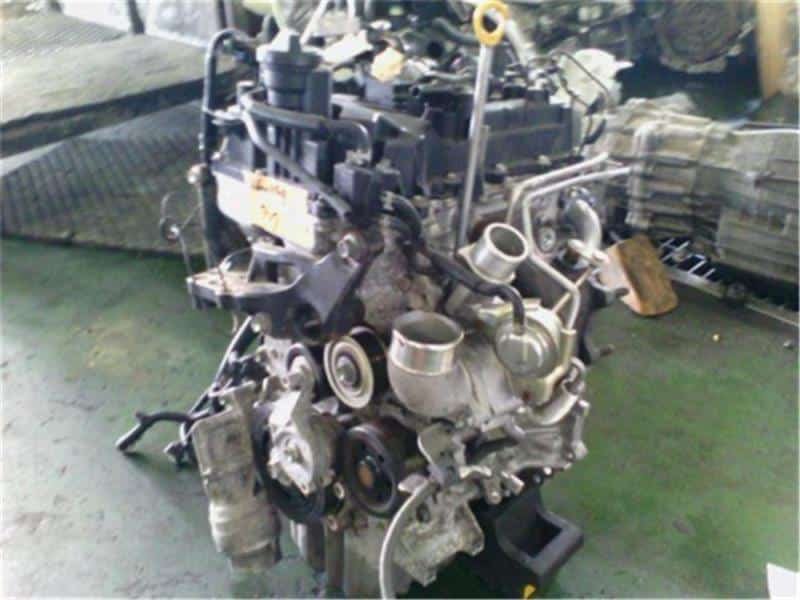
Raize: 1KR-VET only, at first
The Raize compact SUV went on sale in Japan on 5 November 2019. Every launch version used the 1.0 turbo 1KR-VET, paired with a D-CVT. D-CVT was a Daihatsu transmission used in a Toyota for the first time, and Toyota said the combination gives the torque of a 1.5-litre engine, according to Toyota’s Raize launch release. Daihatsu’s twin is the Rocky.


- Raize turbo engine
- Raize A200A engine
- Raize 2020 engine
- Raize A210A (4WD) engine
- Raize 2021 engine
- Raize 1KR-VET engine
- Raize 2025 engine

1KR-FE cars: Passo
The Passo has used the 1KR-FE in all three generations, from the KGC10 to the KGC30 and KGC35 and on to the M700A and M710A. It is one of the cheapest and most common 1KR-FE donor cars.
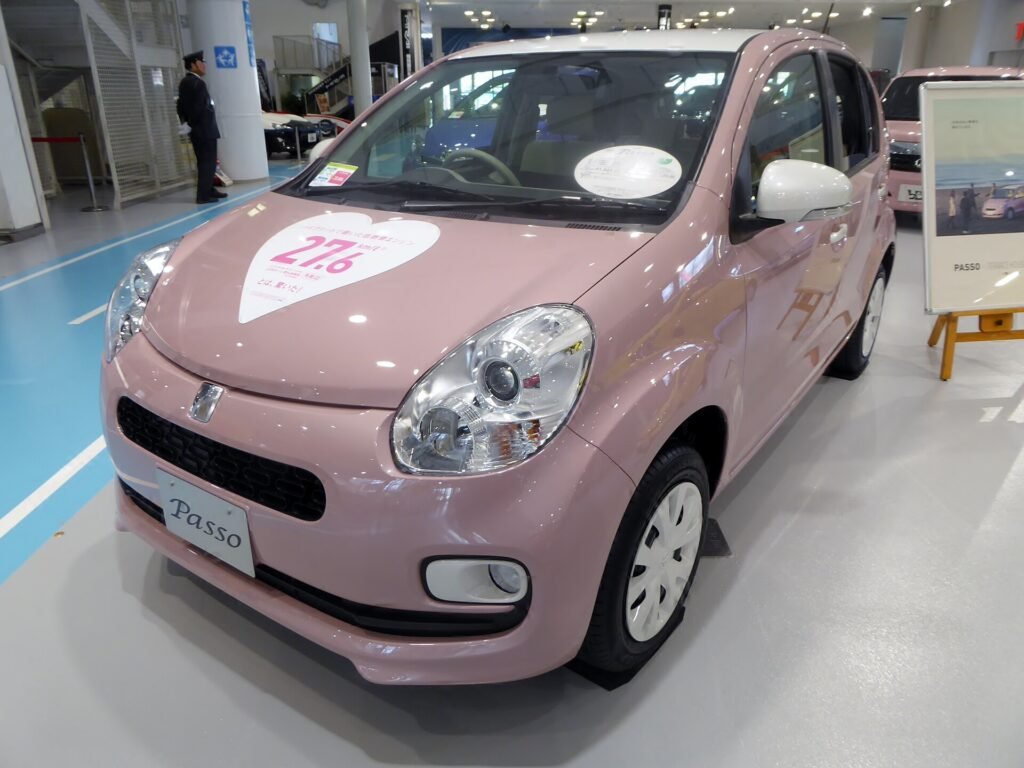
- Passo KGC30 engine
- Passo 2013 engine
- Passo 2014 engine
- Passo KGC35 (4WD) engine
- Passo 2011 engine
- Passo M700A engine
- Passo 2018 engine
- Passo 2021 engine
- Passo M710A (4WD) engine
- Passo 2019 engine
- Passo KGC10 engine
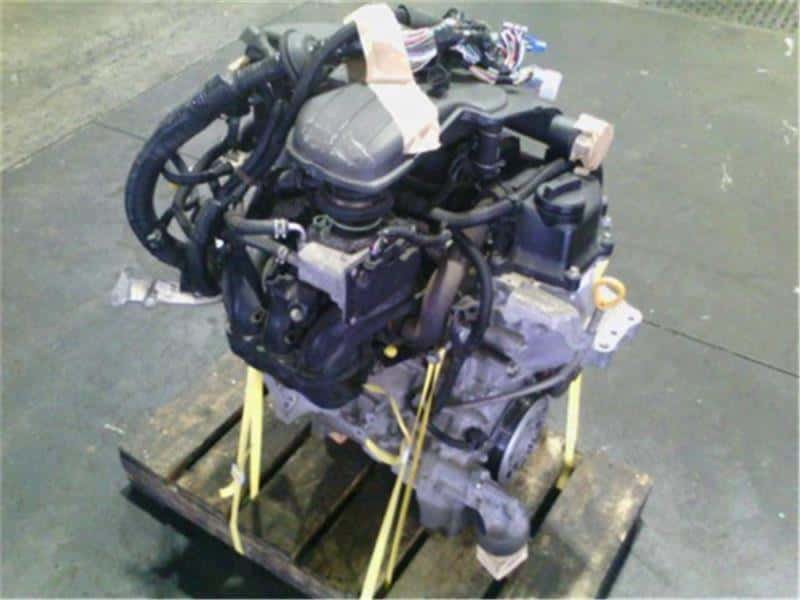

1KR-FE cars: Vitz, Yaris and iQ
The 1.0 versions of the Vitz (KSP90 and KSP130), the Japanese Yaris (KSP210) and the iQ use the 1KR-FE. Toyota’s 2005 Vitz price list shows the new 1.0 engine at the bottom of the range, according to Toyota’s 2005 Vitz release. The 1.0 KSP130 continued it from December 2010, as shown in Toyota’s 2010 Vitz release.

- Vitz KSP130 engine
- Vitz 2015 engine
- Vitz 2017 engine
- Vitz 1.0 engine
- Vitz KSP90 engine
- Vitz KSP90 engine (2010)
- Yaris KSP210 engine
- Yaris 1KR-FE engine
- Yaris 2024 engine
- iQ KGJ10 engine
- iQ 2009 engine

In Europe, the 1KR-FE also powered the Toyota Aygo and its Citroën C1 twin, according to the KR engine reference. European versions can differ in details from Japanese engines, so tell us your market.

Why three cylinders? The KR design in plain English
A lot of buyers worry when they hear “three-cylinder”. They assume it means rough or fragile. In the 1KR-FE vs 1KR-VET case, the three-cylinder layout is the reason these engines are so cheap to run and so easy to find.
Fewer parts, less friction
A three-cylinder 1.0 has fewer pistons, rings, valves and bearings than a four-cylinder of the same size. Each cylinder is also bigger, which loses less heat. That helps fuel economy, and it keeps the engine small and light. The KR engine reference gives a weight of about 69 kg with ancillaries. That is part of why Toyota and Daihatsu could fit it into tiny cars like the iQ and still leave room inside.
Long stroke for low-speed pull
The 1KR-FE has a 71 mm bore and a longer 84 mm stroke. A long stroke tends to help torque at low and middle revs, which suits city cars that spend most of their time below 4,000 rpm.
Why add a turbo?
A 1.0 engine on its own is fine in a light car, but a tall minivan like the Roomy or an SUV like the Raize weighs more and has more frontal area. Rather than fit a bigger engine, Toyota and Daihatsu added a turbo to the same 1.0. The turbo lifts torque to 1.5-litre levels, and the engine stays light and compact for city driving. That is the logic behind the 1KR-FE vs 1KR-VET split.
The balance question
Three-cylinder engines have a natural rocking motion, so you feel a little more vibration at idle than with a four-cylinder. It is normal and not a fault. Worn engine mounts make it much worse, which is why we suggest checking them whenever you replace a KR engine.
1KR-FE vs 1KR-VET running costs beyond fuel
- Parts supply. Both are built in large numbers, and the 1KR-FE especially is used in Japan, Europe and Asia. Filters, plugs, coils and gaskets are easy to find.
- Three of everything. Three spark plugs and three coils cost less than four.
- Turbo extras. The 1KR-VET may need turbo hoses, gaskets or the turbo itself eventually. A plain 1KR-FE has none of these.
- Oil. A turbo engine is fussier about oil quality and change intervals, so budget a little more for servicing.
- Replacement engines. Both are among the cheapest engines to replace in our range.
Passo and Boon: the easiest 1KR-FE to source
If you own a Passo or a Daihatsu Boon, you are in luck. They are among the most common 1KR-FE cars in our stock, across three generations and both two- and four-wheel drive. That means you can be choosy: pick the closest year, the lowest mileage or the lowest price, whichever matters most to you. Tell us whether your car is a KGC10, KGC30, KGC35, M700A or M710A, and we will match it.
Why buy your 1KR-FE or 1KR-VET from us
Small Toyota and Daihatsu engines are a big part of our stock, so for most model codes we can offer several engines to choose from. Every listing names the donor car, its model code and its year. We check fitment against your chassis number before you pay, ship worldwide, and back each engine with our warranty policy. Whichever side of the 1KR-FE vs 1KR-VET split your car is on, we can usually supply it.
Can you swap a 1KR-FE for a 1KR-VET?
This is the question we hear most from Roomy, Tank and Passo owners. The turbo engines are not much more expensive, so people ask whether they can turn a plain car into a turbo one. Our honest answer on a 1KR-FE vs 1KR-VET swap: technically possible in a car that was sold with both, but it is a conversion, not a replacement.
- Turbo plumbing. The turbo needs its own oil feed and return, coolant lines, intake piping and exhaust parts. None of these exist on a 1KR-FE car.
- Engine computer and immobiliser. The turbo engine needs its own computer, and it has to work with the car’s immobiliser and CVT.
- Gearbox. The CVT has to handle about 50 percent more torque and be programmed for it.
- Cooling. A turbo engine makes more heat, so the radiator and cooling parts may differ.
- Paperwork. In many countries, a change of engine type must be declared or inspected.
In a Passo, Vitz or iQ, which were never sold with the turbo, it is even harder. Our advice: replace like with like. If you want the turbo’s extra pull, a car that came with the 1KR-VET from the factory is the cheaper route.
Going the other way
Some turbo owners ask about fitting a cheaper 1KR-FE. You would lose a lot of torque in a heavy car, and you would still need computer and wiring changes. We do not recommend it.
1KR-FE vs 1KR-VET reliability
The 1KR-FE has been in production since 2004 and is used in a huge number of small cars, from Japanese city cars to European Aygos. It is a simple engine with a chain, port injection and no turbo. When it fails early, the cause is nearly always neglect.
The 1KR-VET adds a turbo, which brings extra things to look after. A turbo spins very fast and depends on clean oil, so it is less forgiving of missed oil changes or low oil.
- Oil level and changes (both). Three-cylinder engines hold little oil. Running low wears the timing chain, tensioner, VVT and bearings. Turbo engines also risk turbo damage.
- Overheating (both). Aluminium heads and blocks do not tolerate it. Keep the coolant, radiator and fan in good order.
- Turbo care (1KR-VET). Use the right oil, keep to the change interval, and do not shut the engine off straight after hard driving.
- Vibration and engine mounts (both). Three-cylinder engines shake a little more by nature. Worn mounts make it worse, so check them when you fit a new engine.
- Ignition coils and plugs (both). Misfires are common on older engines and cheap to fix.
In the 1KR-FE vs 1KR-VET reliability debate, the plain engine is simpler. Both are dependable if serviced properly, and the condition of the engine you buy matters most.
What to check when buying a used 1KR-FE or 1KR-VET
Our guide to buying a used engine covers this in depth. For KR engines, focus on these:
- The right version. 1KR-FE or 1KR-VET. They look similar from above.
- The donor car. An engine from the same model code and drive type as yours fits with the least work.
- For a turbo, the turbo itself. Ask whether it comes with the turbo and whether there is play or oil in the intake pipes.
- Mileage and history. Ask how the mileage was recorded.
- What is included. Long block, or complete with intake, sensors and ancillaries?
- Warranty. Ours is in our warranty policy.
Repair or replace?
Not every fault means a new engine. A warning light, rough idle or misfire is often a coil, plug, sensor or vacuum leak. On a 1KR-VET, low power can be a boost leak or a failed turbo rather than the engine. Get those checked first. These usually point to a replacement:
- Knocking from the bottom end, often after running low on oil
- Low compression on one or more cylinders
- Coolant in the oil, or oil in the coolant
- Heavy oil use with blue smoke
- A failed turbo that has sent debris or oil into the engine
- A seized engine
Used KR engines are some of the cheapest engines we sell, so a replacement is often less expensive than a rebuild once you count labour.
1KR-FE vs 1KR-VET prices: what our engines cost
Prices change with stock, mileage and what is included, so always check the listing. Here is a sample of our 1KR-FE vs 1KR-VET prices at the time of writing.
| Listing | Engine | Price |
|---|---|---|
| Roomy M910A engine | 1KR-FE | $279 |
| Passo 2018 engine | 1KR-FE | $279 |
| Toyota 1KR-FE engine | 1KR-FE | $289 |
| Roomy M900A engine | 1KR-FE | $313 |
| Passo M700A engine | 1KR-FE | $330 |
| Vitz KSP130 engine | 1KR-FE | $408 |
| Yaris KSP210 engine | 1KR-FE | $441 |
| iQ KGJ10 engine | 1KR-FE | $469 |
| Toyota 1KR-VET engine | 1KR-VET | $324 |
| Tank turbo engine | 1KR-VET | $367 |
| Roomy 1KR-VET engine | 1KR-VET | $381 |
| Raize A210A engine | 1KR-VET | $441 |
| Raize turbo engine | 1KR-VET | $497 |
| Roomy turbo engine | 1KR-VET | $549 |
Why the prices are so close
You might expect the turbo to cost far more, but many of our 1KR-VET engines are priced close to the plain ones. Both come from cars built in large numbers, and the Roomy and Tank turbo engines are plentiful. Prices rise for newer donor cars, low mileage and complete engines. Older Vitz KSP90 engines can cost more than you expect, because there are fewer of them. If two listings look alike and you are unsure which is better value, ask us.
1KR-FE vs 1KR-VET: which should you buy?
You drive a Passo, Boon, Vitz 1.0, Yaris 1.0 or iQ
Buy a 1KR-FE from the same model code and drive type. These are plentiful and cheap.
You drive a non-turbo Roomy, Tank or Thor
Buy a 1KR-FE. If it is four-wheel drive (M910A), it is almost certainly a 1KR-FE.
You drive a turbo Roomy, Tank or Thor
Buy a 1KR-VET. Check that the turbo comes with the engine or that yours is healthy enough to move across.
You drive a Raize or Rocky 1.0
Buy a 1KR-VET from the same drive type: A200A for two-wheel drive, A210A for four-wheel drive.
You run several of these cars
Taxi, rental and delivery fleets use a lot of Roomys, Passos and Raizes. Ask us about buying more than one engine.
Our 1KR-FE engines for sale
- Toyota 1KR-FE engine
- Passo 2015 engine
- Passo 2016 engine
- Vitz 2012 engine
- Yaris 2020 KSP210 engine
- iQ KGJ10 engine (2008)
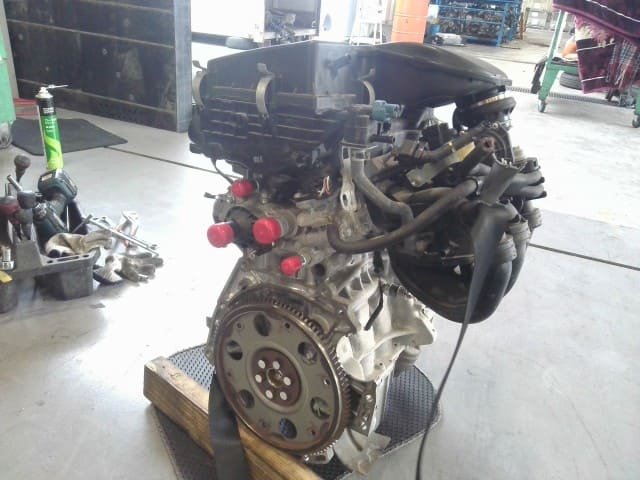
Our 1KR-VET engines for sale

See every Toyota engine we carry in our Toyota engines for sale category, our Daihatsu engines, or the whole range in used engines for sale.
Do not forget the CVT
Most 1KR cars use a CVT. If yours shudders, slips or whines, sort it out while the engine is out, because a new engine will not fix it. Browse our transmissions for sale, and read our guide on used vs rebuilt transmissions.
1KR-FE vs 1KR-VET on the road: how the difference feels
The 1KR-FE is a willing little engine in a light car. In a Passo or Vitz around town it feels perky, and the three-cylinder thrum is part of its character. Load up a Roomy with four adults and luggage, though, and you will hear it working. The CVT holds high revs on hills and when merging, and overtaking needs planning.
The 1KR-VET changes that. With 140 Nm from 2,400 rpm, it pulls the same Roomy away from lights and up hills without the engine screaming. On a motorway it feels more like a 1.5. That is exactly what Toyota claimed for it at launch.
So when people ask us how to choose a car on 1KR-FE vs 1KR-VET grounds, we say: if you mostly drive alone in town, the plain engine is enough. If you carry passengers, drive on fast roads or live somewhere hilly, the turbo is worth having. If you already own the car, buy the engine it came with.
Japanese-market engines: what to expect
Most of our KR engines come from Japanese-market cars, which is why our listings show codes such as DBA-M900A or 5BA-KSP210. The engines are the same basic design sold in many countries, but sensors, intake parts, emissions parts and connectors can differ between markets and years. A mechanic can usually move these across from your old engine. Tell us your car’s market and year, and we will flag anything to watch.
1KR-FE vs 1KR-VET in imported cars
Many Passos, Vitzes, Roomys and Raizes now drive far from Japan, imported second-hand. The 1KR-FE vs 1KR-VET rule works the same way there. Papers sometimes show the import or registration year rather than the build year, so use the model code, grade and chassis number. Heat, dust and rough roads are harder on small engines than Japanese city driving, so keep the cooling system and air filter in good order. A turbo engine also needs the right oil, which may be harder to find in some places. Stock up if you need to.
Common mistakes when ordering a KR engine
- Ordering by model code alone for a Roomy or Tank. M900A covers both engines. Check the grade or the engine itself.
- Mixing up plain and turbo. They are not interchangeable without a conversion.
- Assuming every small Toyota is a 1KR. Many 1.3 cars use the 1NR-FE or 2SZ-FE.
- Not checking the turbo. If you reuse your old turbo, make sure it is healthy, or it can damage the new engine.
- Not fixing the cause. If the old engine overheated or ran low on oil, fix that first.
- Skipping fresh fluids. Fit new oil, an oil filter, an air filter, spark plugs and coolant.
How to order your 1KR-FE or 1KR-VET from us
- Find your model code, grade and year. Our guide on how to find your engine code can help.
- Choose a listing. Pick a 1KR-FE engine or a 1KR-VET engine from a car that matches yours.
- Ask us to confirm fit. Send your chassis number and model code through our contact page.
- Arrange delivery. We ship worldwide. See our shipping policy.
- Install it properly. Use a qualified mechanic and follow our warranty terms.
Looking after your replacement KR engine
- Check the oil every couple of weeks. Small engines hold little, and turbo engines are sensitive to low oil.
- Change the oil on time, and sooner for short trips, taxi work or a turbo engine driven hard.
- Keep the cooling system healthy. Fresh coolant, a good radiator and a working fan.
- Replace the air filter and spark plugs at Toyota’s or Daihatsu’s intervals.
- Service the CVT with the correct fluid.
- Check the engine mounts while the engine is out.
- Drive gently at first and check for leaks over the first few hundred kilometres.
1KR-FE vs 1KR-VET for fleet owners
Roomys, Tanks and Passos are popular with rental companies, taxi firms and delivery businesses because they are cheap to run. If you run several, keep a register of each car’s model code, grade, engine and drive type. When one fails, you can order the right engine the same day. Count the downtime as well as the price: a matching engine ordered quickly usually costs less overall than a bargain that needs extra parts. Standardise on one engine type if you can, so parts and know-how carry across the fleet.
A short history of the 1KR-FE vs 1KR-VET engines
Daihatsu designed the KR engine for small cars, and production began in 2004, according to the KR engine reference. It went into Japanese cars like the Passo and Vitz and into European city cars like the Aygo. In 2016 Toyota and Daihatsu added the 1KR-VET turbo for the heavier Roomy and Tank, then used it in the Raize and Rocky SUVs from 2019. That is why our 1KR-FE vs 1KR-VET stock is uneven: the plain engine has been around twelve years longer and in far more models.
Checklist before you ask for a quote
- Make, model and full model code (for example M900A or KGC30)
- Grade, including whether it is a turbo
- Year and month of manufacture
- Chassis number
- Two- or four-wheel drive
- The country you need the engine shipped to
- What happened to your old engine
1KR-FE vs 1KR-VET: key takeaways
- Family: in the 1KR-FE vs 1KR-VET comparison, both are 1.0-litre three-cylinder KR engines designed by Daihatsu.
- Turbo: the 1KR-FE is naturally aspirated and the 1KR-VET turbocharged.
- Torque: the turbo makes about 140 Nm against roughly 92 Nm, which Toyota likens to a 1.5-litre engine.
- Fuel: the official gap is small. Toyota rated the Roomy at 24.6 km/L plain and 21.8 km/L turbo.
- Codes: the Roomy and Tank M900A covers both, so check the grade. The Raize at launch was turbo only.
- Swaps: possible as a project, not a simple replacement.
- Best buy: for most owners, the right answer to 1KR-FE vs 1KR-VET is the engine the car was built with.
1KR-FE vs 1KR-VET: frequently asked questions
What is the difference between the 1KR-FE and 1KR-VET?
Both are Daihatsu-designed 1.0-litre three-cylinder engines from the KR family. The 1KR-FE is naturally aspirated. The 1KR-VET is turbocharged and makes about 98 PS and 140 Nm, compared with about 69 PS and 92 Nm for the 1KR-FE in the Yaris.
Is the 1KR-VET reliable?
Yes, if it is serviced properly. Like any turbo engine, it is less forgiving of low oil or missed oil changes than the plain 1KR-FE.
Can I fit a 1KR-VET in a car that had a 1KR-FE?
It is possible in a Roomy or Tank, which were sold with both, but you need the turbo plumbing, the matching computer and a CVT that can take the torque. It is a conversion, not a straight replacement.
Which Roomy has the turbo?
The G-T and Custom G-T grades use the 1KR-VET. At launch, the turbo came only with front-wheel drive.
Does the 1KR-FE have a timing belt or chain?
A chain. Both versions use a chain-driven twin-cam head.
Which engine is in the Toyota Raize?
The 1.0 Raize uses the 1KR-VET turbo with a D-CVT. Later 1.2 and hybrid versions use different engines.
How much is a 1KR-FE or 1KR-VET engine?
Most of our 1KR-FE and 1KR-VET engines cost a few hundred dollars. Check each listing for today’s price.
Do you sell 1KR-FE and 1KR-VET engines?
Yes. We sell 1KR-FE engines and 1KR-VET engines from named donor cars, and we ship worldwide.
Final word on 1KR-FE vs 1KR-VET
The 1KR-FE vs 1KR-VET choice is really about one part: the turbo. The engines share a family, a size and a lot of design. But the turbo version needs its own plumbing, computer and care, and it gives a heavy car much more pull. Check your model code and grade, match plain to plain and turbo to turbo, and you will get an engine that fits first time.
Browse our 1KR-FE engines for sale and 1KR-VET engines for sale, or contact us with your chassis number and we will help you choose.